
Day six on the Alvord Desert playa. Your fresh tank reads a quarter full, the nearest spigot is 70 miles back the way you came, and you just watched your travel partner rinse a coffee mug under a running tap like water comes out of the wall at home. That's the moment most van lifers learn the hard lesson: off-grid trips don't end when you run out of food or patience. They end when you run out of water.
The good news is that water management is a skill, not a sacrifice. The van lifers who stay out for two weeks at a stretch aren't hauling 200 liters — they're just deliberate about every liter they carry. These van life water tips come down to three things: carry the right amount, waste nothing, and separate your drinking water from everything else.
Get those three right and water stops being the thing that sends you home early.
Know Your Real Daily Number
Most people guess high on drinking water and low on everything else. Flip that.
Drinking and cooking: 4–5 liters per person, per day
That covers drinking, coffee, and cooking with a little margin for hot days. If you're hiking hard or in desert heat, bump it to 6. This is the one category you never shortchange — everything else on this list flexes, this doesn't.
Dishes: 2–3 liters per day if you're disciplined
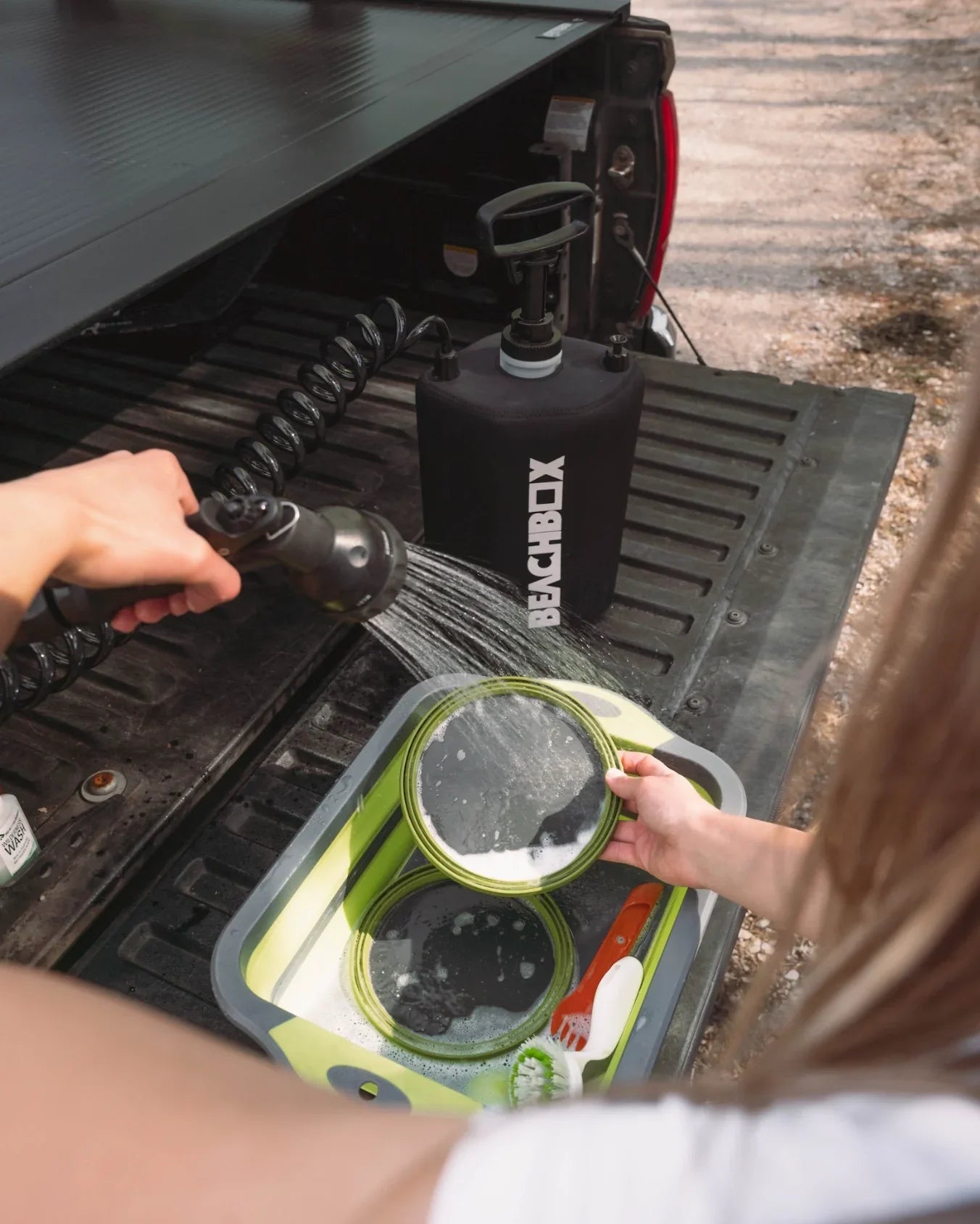
The two-bin method is the standard for a reason: one bin with a splash of soapy water for scrubbing, one with clean water for rinsing. Wipe plates with a paper towel before they hit the water and your wash water stays usable twice as long. Cooking one-pot meals cuts this number in half again.
Rinsing and hygiene: 3–5 liters per day
This is where most water budgets quietly die. An open jug tipped over your head wastes most of what you pour. A pressurized shower with a proper spray head does the same job with a fraction of the water — more on that below.
Add it up: a couple traveling for a week needs roughly 70–90 liters total. Most van builds carry 40–75 liters of fresh water, which is why the rest of this post is about stretching it.
Stretch Every Liter
Pressure beats volume
The single biggest upgrade in off-grid hygiene is pressurized water. Gravity bags and open jugs dump water; pressure meters it. A portable shower tank with a hand pump and a multi-mode spray head lets you rinse dishes, sandy feet, or a full head of shampoo on a mist or jet setting — using a liter or two where a jug would use five. Five liters of pressurized water is a legitimate full-body shower plus a gear rinse, which sounds impossible until you've tried it.
Heat water once, use it twice
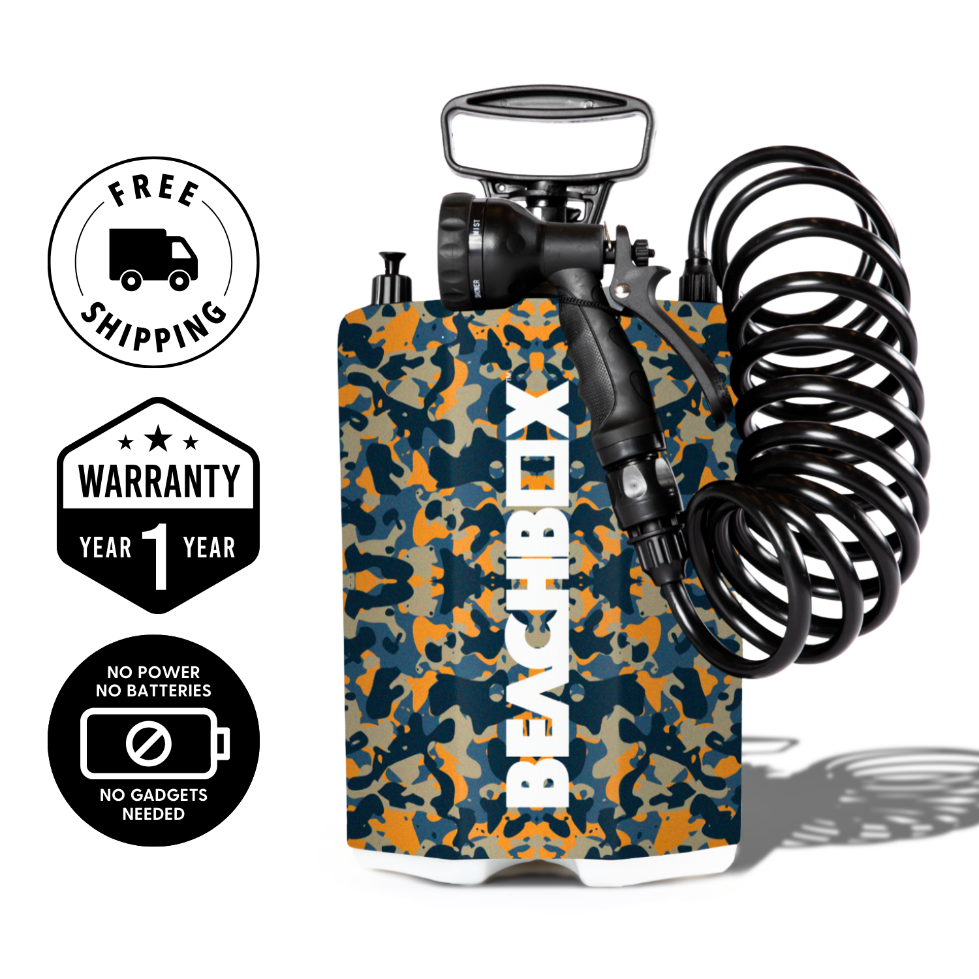
Warming water off-grid costs fuel, so don't waste the heat. Fill an insulated tank with hot water in the morning — BeachBox's 33mm neoprene sleeve holds heat for hours without a battery, propane line, or solar panel — and that same fill handles your midday dish rinse and your evening shower. No reheating, no idling the stove.
Catch what you'd normally lose
The cold water that runs while you wait for hot? Catch it in a bottle for the dog or the dishes. Pasta water? Let it cool and use it to rinse the pot. It sounds obsessive until you're on day ten and still comfortable.
Separate Your Water Systems
Long-trip van lifers almost universally run two or three separate water systems, and it's worth copying:
Drinking water stays in dedicated jugs or your plumbed fresh tank — filled only from taps you trust, never topped off from streams or questionable spigots without filtering.
Wash water lives in a separate container. This is where a standalone shower tank earns its keep: fill it from a lake, a stream, or a gas station hose, and your drinking supply never gets contaminated or depleted by a rinse job. If you're choosing between portable shower tanks, pick one you can fill from any source — wide opening, no plumbing required.
Emergency reserve is 5–10 liters that you pretend doesn't exist. It rides in the van untouched and buys you a day if you misjudge a refill stop.
This separation also solves the basecamp problem — if your shower water lives in your van's plumbed tank, every rinse drains your drinking supply. A standalone tank decouples the two, so a beach day for the dog doesn't shorten your trip.
Refill Like a Local
Finding water is easier than most first-timers think, but it rewards planning:
Reliable sources: city parks and sports fields, gas stations (ask first — most say yes), campgrounds (many sell fill-ups to non-guests for a few dollars), visitor centers, dump stations with potable taps, and apps like iOverlander where users flag verified spigots.
Plan refills around your route, not your tank. Top off every time you pass a good source, even at half-full. The stress of hunting for water when you're nearly empty is exactly what this whole system is built to avoid.
Filter anything wild. A gravity or squeeze filter turns lakes and streams into wash water instantly and drinking water reliably. For shower and dish duty, wild water straight into a separate tank is fine — that's the point of keeping systems separate.
Frequently Asked Questions
How much water do I need for a week of van life?
Budget 10–12 liters per person per day if you want to drink well, cook real meals, wash dishes, and rinse off daily — so roughly 70–85 liters per person per week. Disciplined travelers using pressurized rinse water and one-pot cooking routinely get that under 8 liters a day.
How do you shower in a van without built-in plumbing?
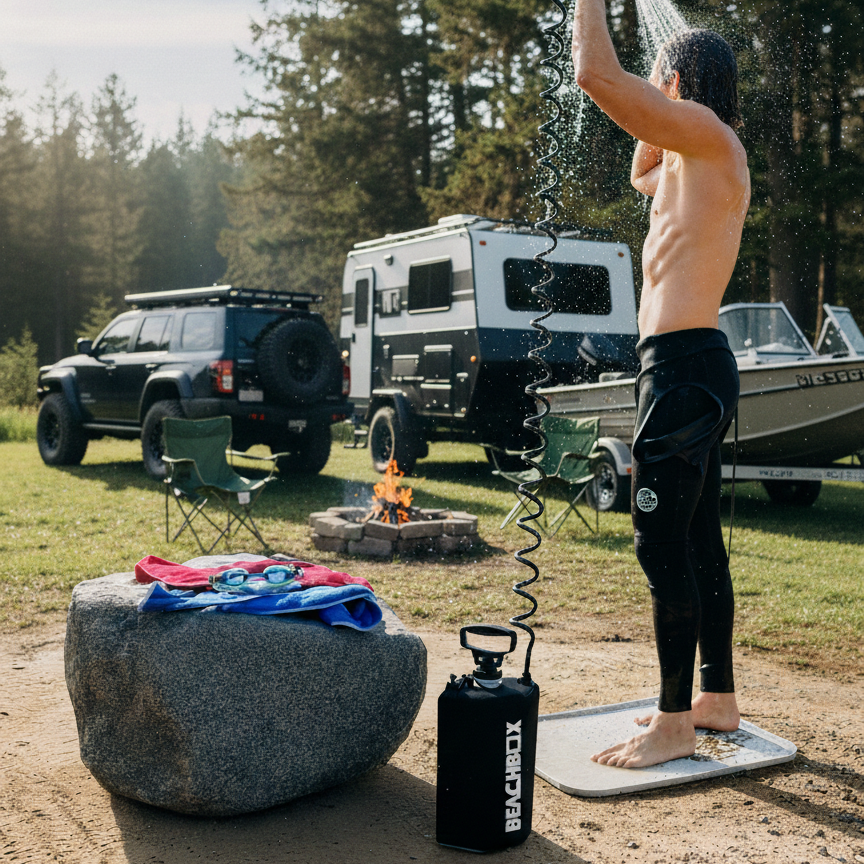
A pressurized portable shower is the simplest answer: fill a tank with warm water, pump it by hand to build pressure, and shower outside the van with a spray head. An insulated tank like the BeachBox holds the heat for hours, so you can fill it in the morning and shower warm after sunset — no battery, propane, or solar required.
Can I use lake or stream water in a portable shower?
Yes — that's one of the best reasons to keep a shower tank separate from your drinking system. Scoop or funnel wild water straight into the tank for rinsing gear, dogs, and yourself. Just avoid getting untreated water in your mouth or on open cuts, and rinse the tank with clean water afterward.
How do van lifers keep water from freezing in winter?
Keep tanks inside the heated living space rather than underslung, and insulate anything that can't come inside. An insulated shower tank has a head start here — the same neoprene that keeps water hot in summer slows freezing in winter. Store it filled and inside overnight, and you'll have liquid water in the morning.
How much water does a portable shower actually use?
With a pressurized 5-liter tank and a low-flow spray mode, a full rinse-off uses 2–4 liters. That's a fraction of a home shower and far less than pouring from a jug, which is why pressurized tanks are the standard recommendation for off-grid hygiene.
The Bottom Line
Water is the real clock on any off-grid trip. Not battery, not food — water. The van lifers who stay out longest carry a known daily number, keep drinking water sealed off from wash water, pressurize everything they rinse with, and top off at every good source they pass.
The cheapest upgrade in that whole system is the rinse setup. Swapping open jugs for a 5-liter insulated, pressurized tank saves several liters a day, gives you warm showers without burning fuel, and lets you use wild water sources without touching your drinking supply. If you're building out your rig, sort your water before your fridge — you'll feel it on every trip. For the shower side specifically, see our full breakdown of the best portable shower for van life and overlanding, or how BeachBox stacks up in our BeachBox vs RinseKit comparison.
Fill it hot in the morning. Shower warm at night. Stay out longer.

Leave a comment
This site is protected by hCaptcha and the hCaptcha Privacy Policy and Terms of Service apply.