
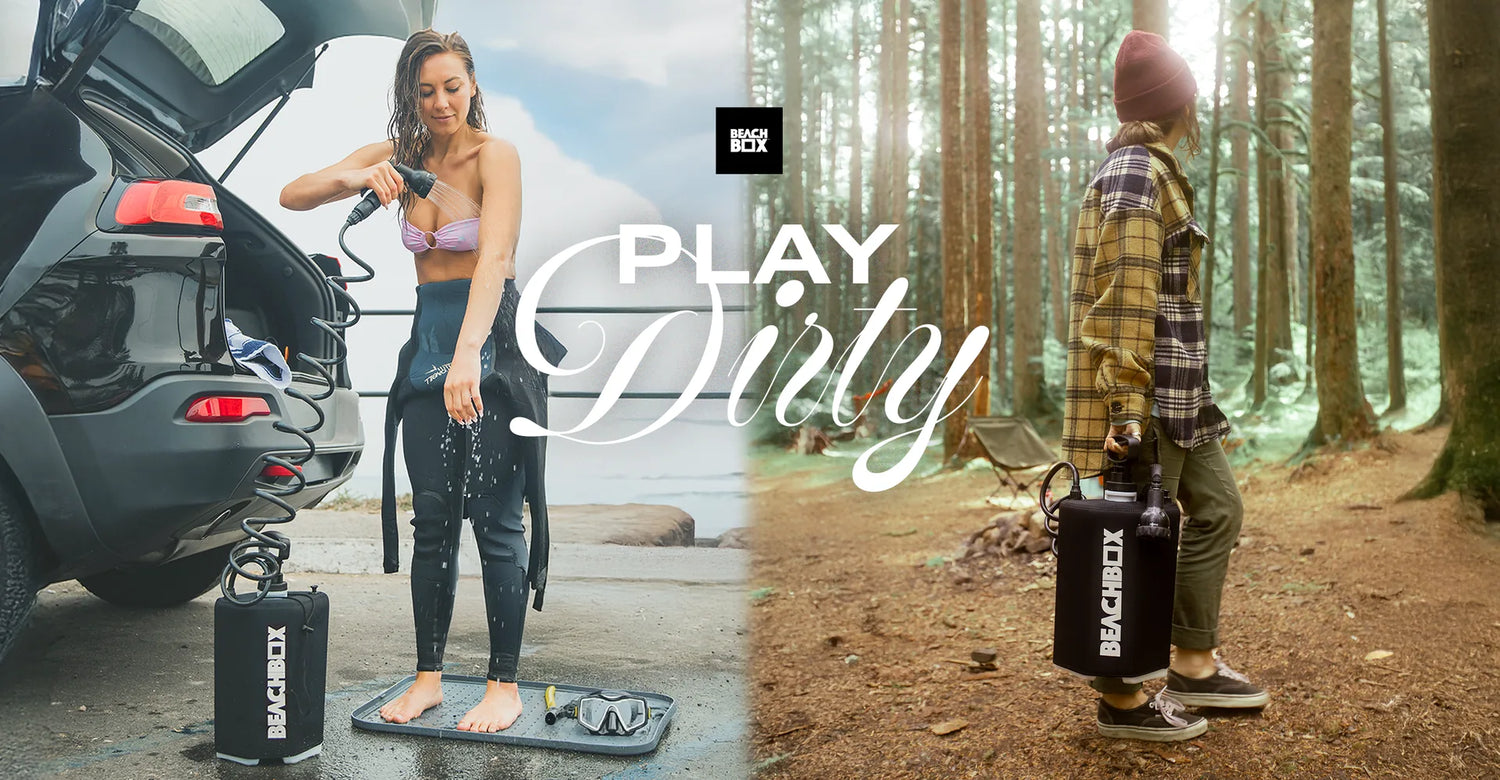
You've narrowed it down to two. BeachBox or RinseKit. Both promise a hot, pressurized rinse wherever you are — after surfing, camping, hiking, or wrangling a salt-covered dog. Both have fans who swear by them.
But they're built on different ideas of what a portable shower should actually be, and that difference matters depending on how you use it.
Here's a straight comparison — no affiliate agenda, just what each product does well and where each one falls short.
What Each Product Actually Is
Before getting into specs, it helps to understand the design philosophy behind each one.
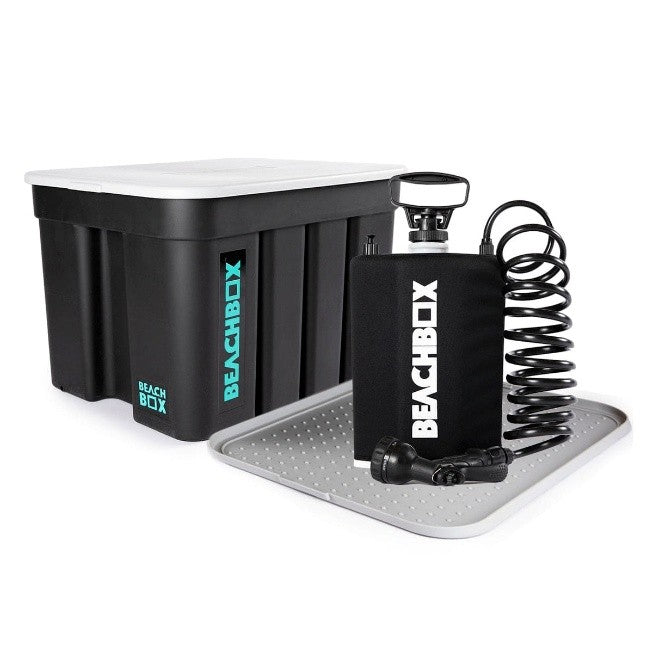
BeachBox is a self-contained 5-liter tank wrapped in a 33mm neoprene insulating sleeve, with a built-in pump and five spray modes. You fill it with hot water at home — the neoprene keeps it warm on the way there — and pressure comes from a hand pump. No electricity, no battery, nothing to plug in or charge. It's built around a single idea: works anywhere, every time.
RinseKit is a pressurized jug that you pre-pressurize using a standard garden hose connection. Most models need a pressure source to charge — you connect it to a tap, build up pressure, then take it with you. Some newer RinseKit models include an electric pump. The original design is pressure-first, insulation second.
Head-to-Head Comparison
Water Temperature: How Long Does It Stay Hot?
This is where BeachBox has a clear structural advantage.
BeachBox uses an insulated tank — the same thermal principle as a quality water bottle. Fill it with hot water before you leave, and it keeps that water noticeably warm by the time you get to the beach or trailhead. How long it stays warm depends on conditions — ambient temperature, how hot you filled it, whether it's sitting in a shaded car or baking in direct sun — but the insulation makes a real difference versus a standard plastic jug.
RinseKit's standard models are uninsulated. The water temperature when you use it is essentially whatever it was when you filled it, minus what it lost on the drive over. RinseKit does sell an optional HeatKit — a battery-powered heater rod — but that's an additional $100+ on top of the unit price.
Winner: BeachBox — warm water is built in, not an add-on.
Pressure: How Strong Is the Spray?
RinseKit's reputation is built on pressure. The original model uses a pre-charged pressure vessel — connect it to a garden hose for 30 seconds, and you get a strong, consistent spray without any pumping. If consistent high pressure is your priority, RinseKit delivers it well.
BeachBox uses a hand pump to build pressure. A few pumps before you start, and you get strong flow — but you'll re-pump every minute or two during a longer rinse. For rinsing off after a surf session or a hike, this isn't a problem. For washing a dog who's covered in mud and won't stand still, the extra pumping step can get annoying.
Winner: RinseKit on raw pressure. BeachBox is adequate for most uses but requires manual pumping.
Portability and Setup
Both fit in a car trunk easily. The practical difference is setup.
BeachBox is grab-and-go once it's filled. No hose connection required, no pressurization step at a tap — you fill it at home, throw it in the car, and it's ready when you get there. If you're heading somewhere without a water connection (a beach parking lot, a trailhead, a campsite without hookups), BeachBox works without infrastructure.
RinseKit requires a pressurized water source to charge. That's fine if you're leaving from home with a garden hose, but if you're trying to top it up mid-trip, you need a standard tap connection with decent pressure. Some campgrounds and trailheads have it; many don't.
Winner: BeachBox for off-grid use. RinseKit for setups where you have reliable tap access.
Capacity
BeachBox holds 5 liters (about 1.3 gallons) — enough for a solid personal rinse: hair, wetsuit, feet, and gear.
RinseKit Pro holds 3.5–4 gallons depending on the model. If you need to rinse multiple people, a large dog, or run a more thorough wash, RinseKit's larger tank gives you more to work with.
Winner: RinseKit on raw capacity. BeachBox is sized for personal use — one person, one session.
Durability and Build
BeachBox is built from the same tough, BPA-free materials used in quality coolers. The tank is designed to take knocks in a trunk, sit in the sun, and get used regularly. The pump mechanism is simple — fewer moving parts means less to break.
RinseKit's plastic construction is solid for its price point, but the pressurized system has more complexity: the check valve, the pressure seal, the fittings. More parts means more potential failure points over time.
Winner: BeachBox on long-term durability.
Price
BeachBox starts at $120.
RinseKit pricing varies widely. Direct from their site, the RinseKit Pro runs $189–$240. They're also stocked at Costco for significantly less — $100–$150 depending on the model. If you catch it at Costco, the price gap narrows considerably.
Where BeachBox pulls ahead on value: if you want warm water from RinseKit, you're adding the HeatKit ($100+) on top of the unit price. BeachBox's insulation is included at $120.
Winner: Depends. RinseKit at Costco can undercut BeachBox on price. But if warm water matters, BeachBox delivers it without accessories at a lower total cost than a full RinseKit setup.
Who Should Buy Which One
Buy BeachBox if: - You want warm water without buying accessories - You rinse at spots without tap access — beach lots, trailheads, remote campsites - You want something with no battery, no charging, no infrastructure - You're rinsing one person per session and want a compact unit that fits anywhere
Buy RinseKit if: - You need to rinse multiple people or a large dog in one go — the larger tank matters - Maximum pressure is the priority and you're happy managing a battery or tap connection - You catch it at Costco at a steep discount and don't need warm water
Frequently Asked Questions
Is BeachBox better than RinseKit?
For most users — especially surfers, beach families, and campers who want warm water without accessories — yes. BeachBox's insulation is built in, the capacity is larger, and it works off-grid. RinseKit wins on raw pressure if that's your primary need.
Does RinseKit keep water hot?
Standard RinseKit models do not insulate water. The HeatKit ($100+) heats water electrically, but it's a separate purchase. BeachBox insulates water thermally by design at no extra cost.
Can you use BeachBox without hot water?
Yes. Fill it with cold water and use it as a standard portable rinse. The pump and spray system work the same regardless of water temperature.
How long does BeachBox keep water warm?
It depends on conditions — ambient temperature, starting water temp, and whether it's sitting in shade or sun. The insulated tank keeps water noticeably warmer than an uninsulated jug for a meaningful stretch of time after filling. Fill it with hot water before you leave home and it'll still be warm when you arrive.
What's the best portable shower for surfing?
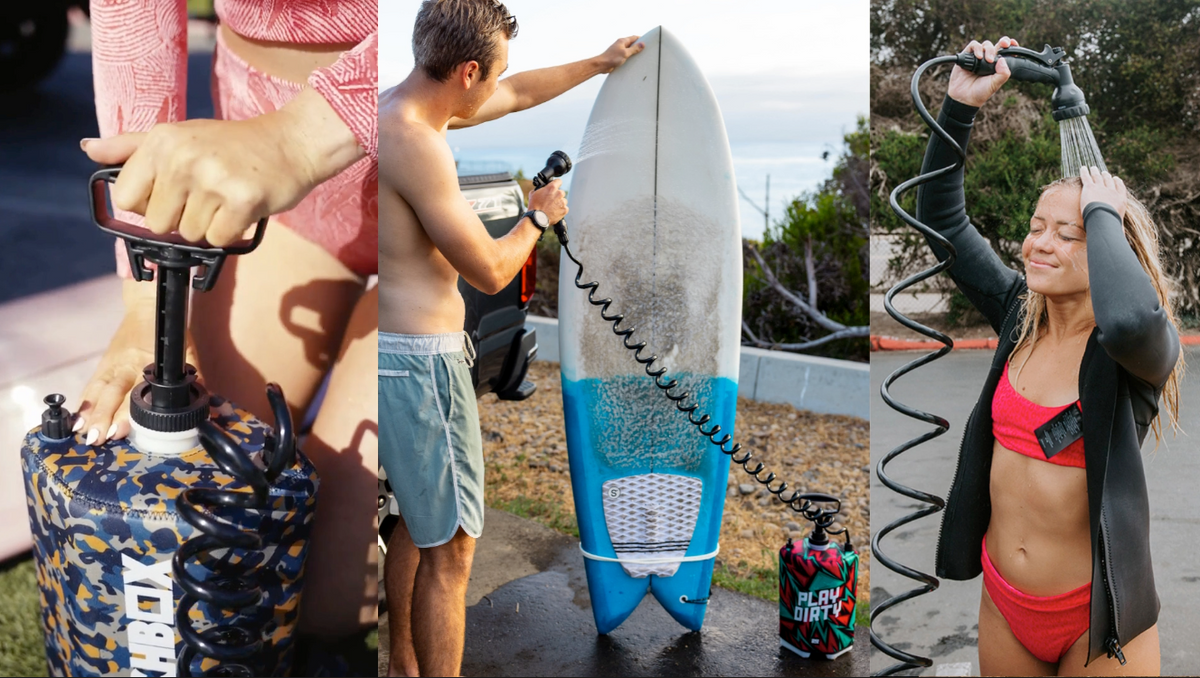
BeachBox is purpose-built for it — the insulated tank means warm water when you get out, the size fits in any SUV trunk, and the pump delivers enough pressure to rinse off a wetsuit, your hair, and your board bag. See our full portable shower guide for surfers for more detail.
Is there a RinseKit with insulation?
RinseKit does not offer a fully insulated tank in their standard lineup. The HeatKit accessory heats water electrically but doesn't retain heat passively.
The Bottom Line
RinseKit built its reputation on pressure and simplicity — and it delivers both. But the decision to skip insulation is a real trade-off that costs you warm water at the beach unless you spend more.
BeachBox was designed for people who want warm water without hauling accessories, and it shows in the build. The insulation is thermal, the capacity is larger, and it works anywhere — no tap, no battery, no extra purchase required.
If you spend time at spots without infrastructure and want warm water when you get out, BeachBox is the more practical choice.

Leave a comment
This site is protected by hCaptcha and the hCaptcha Privacy Policy and Terms of Service apply.