
Best Beach Setup for Families With Young Kids
You get to the beach at 9am with a cooler, a bag of sand toys, a beach tent, sunscreen, snacks, towels, floaties, and two kids under seven. By 10:30, everyone has sand in places sand shouldn't be, your youngest just face-planted in the surf zone, and your toddler is absolutely done with sunscreen reapplication. By 11am, someone's crying.
A good beach setup for families doesn't prevent this. But it does mean you have what you need when it happens — and you can actually enjoy the three hours in between.
The difference between a miserable beach day and a good one usually isn't luck. It's logistics. This is the gear that matters, the setup that works, and the one thing most beach families forget until they've had a bad day without it.
The Gear That Actually Earns Its Spot
Every piece of gear you bring to the beach has to earn its place. Sand is heavy. Kids don't carry things. You are the pack mule. So the question isn't "could this be useful?" — it's "is this worth carrying?"
Shade: The Non-Negotiable
If you have kids under ten, you need shade. A beach umbrella is fine. A pop-up beach tent is better — it blocks wind, gives you a place to put a napping toddler, and creates a home base everyone can find. The UPF 50+ varieties are worth the extra few bucks.
Look for one with sand pockets instead of stakes. On packed sand, stakes pull. Sand pockets — you fill them with, well, sand — hold in almost anything.
The Cooler: Function Over Style
Your cooler is doing real work. Ice retention matters. You want water, snacks, sunscreen that hasn't turned to lava, and whatever you're eating for lunch. A 20-30 liter soft cooler with decent insulation handles a full family day. Wheels are nice if you're walking a long way from the car.
Sand Toys: Bring Less Than You Think
Kids will spend 40 minutes playing with the things you brought and three hours playing with rocks and sticks they found. Bring a bucket, two shovels, maybe a mold. Leave the rest at home.
Sunscreen: Quantity Over Brand
Whatever brand you use, bring more of it than you think you need. On average, you need about one ounce to cover an adult body. Kids squirm. Half of it ends up on the towel. Bring a full bottle minimum. A stick for faces makes reapplication on a moving target significantly less miserable.
Setting Up a Base Camp That Actually Works
Gear matters less than layout. The best beach setup for families has one rule: everything you reach for frequently lives within arm's reach of where you sit.
Pick Your Spot Strategically
Don't set up too close to the water if you have little ones. You want a clear sightline to wherever they're playing, not a sprint distance when someone falls. Far enough back that sneaker waves aren't an issue, close enough that you're not hiking every time someone needs a snack.
Set up with the wind at your back. If you're using an umbrella, make sure it's staked or weighted before you sit down — a spinning umbrella at speed is genuinely dangerous.
Designate a Clean Zone
The towels and any dry gear go on one side of your setup — the "clean" side. Wet stuff, sandy gear, and snorkel equipment go on the other. It sounds like overkill until you spend twenty minutes looking for a dry towel because everything got mixed together.
Put snacks and water in one specific bag, always. When a hungry five-year-old asks, you know exactly where to point.
Phone and Keys
These go in a sealed zip pouch inside the cooler or under a towel. Not on top of the bag. Not in a pocket. In six hours of beach logistics, they will end up in the sand otherwise, every time.
The Step That Most Beach Families Skip
You've got shade, snacks, toys, sunscreen. You're set up well. And then it's time to leave.
Your kids are covered in a mixture of sand, saltwater, sunscreen, and mystery substances. They don't want to leave. The sand won't come off dry skin. You're packing everything with sandy hands. And you're about to get all of this into your car.
Most families deal with this by accepting that the car is ruined and everyone is uncomfortable for the drive home.
The families who have done this enough times bring a portable shower.
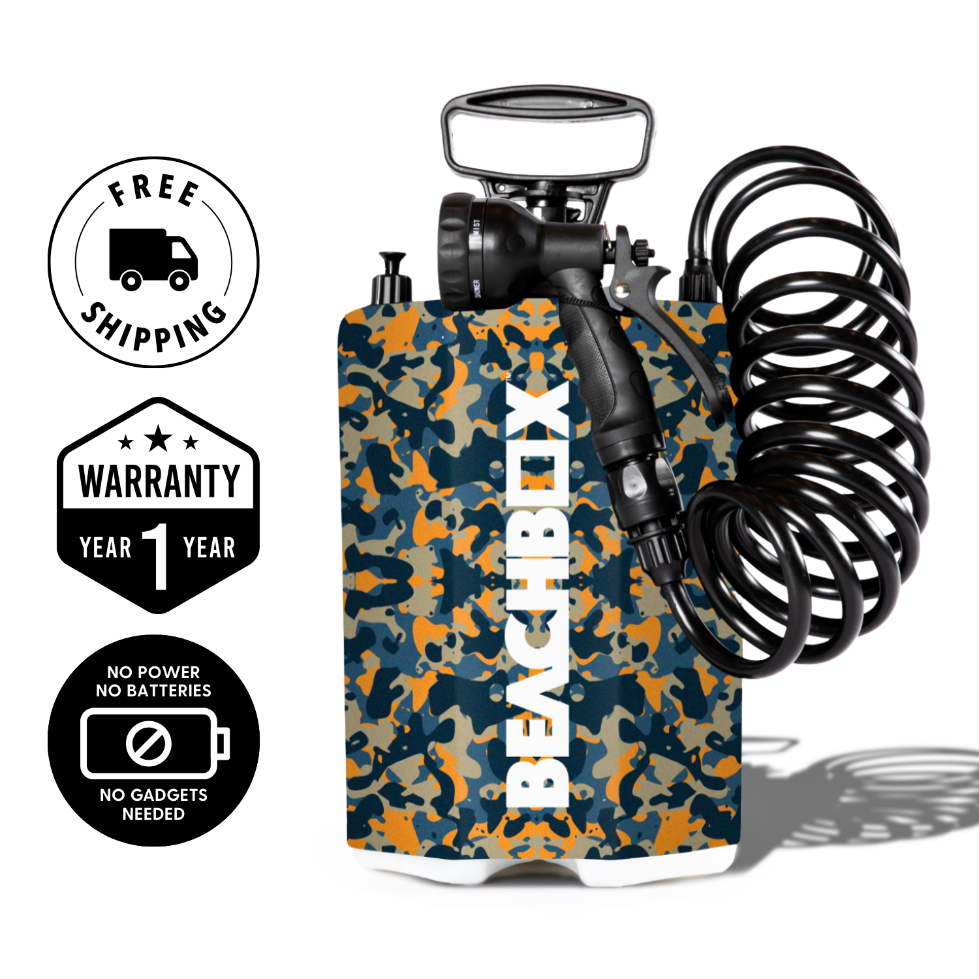
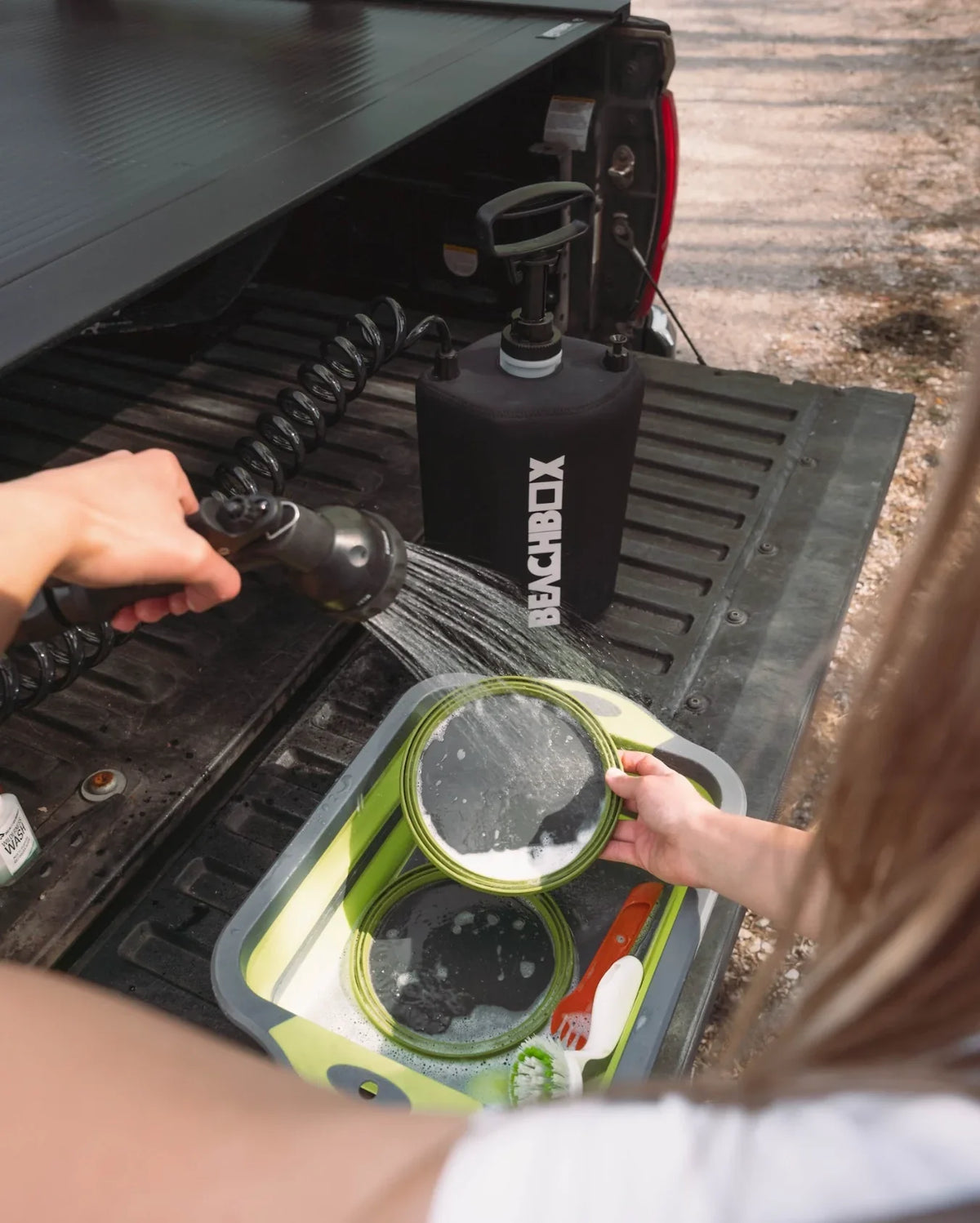
A portable shower for beach days doesn't need to be complicated. The BeachBox portable shower is a 5-liter tank with a hand pump and five spray modes. You fill it with hot water before you leave the house, and the neoprene insulation sleeve keeps it warm for hours. At the end of the day, you use it to rinse kids, rinse feet, and get enough sand off that getting into the car doesn't feel like a punishment.
No electricity. No propane. No solar. Fill it, pump it, rinse off. Then put it back in the car for next time.
For families doing beach days consistently through summer, it changes the end of the day from dreaded to manageable. One rinse station handles two kids and takes maybe five minutes. The car stays cleaner. The kids are more comfortable. The ride home is quieter.
What to Pack: A Realistic Family Beach Checklist
Shelter & Shade
Pop-up beach tent with sand pockets
Extra towels (two per person minimum)
Hydration & Food
20–30L soft cooler with ice
Water bottles (insulated stays cold)
Easy snacks — nothing that requires utensils
Lunch that can survive sand and heat
Sun Protection
SPF 50+ reef-safe sunscreen (full bottle, plus a stick for faces)
Rash guards for kids if you're staying all day
Sand Toys (Minimal)
1 bucket, 2 shovels, 1 mold
Maybe a frisbee or ball for older kids
Rinse & Clean
Portable shower (BeachBox or similar) for post-beach rinse
Microfiber towels — dry faster and pack smaller than terry cloth
Baby wipes (they solve everything)
Small trash bag
Misc
First aid kit
Waterproof phone pouch
Mesh bag for wet gear (keeps it separate from dry stuff)
Sand-free mat if you have room
Frequently Asked Questions
What's the most important thing to bring to the beach with kids?
Shade and water — in that order. Sun exposure on little kids adds up fast, and dehydration turns a fun beach day bad quickly. A pop-up tent with UPF protection and more water than you think you need covers both.
How do you keep sand out of your car after the beach?
The most effective method is rinsing off before you get in. Even a quick rinse of feet, legs, and hands removes most of the sand. A portable shower at the car handles this in under five minutes. Secondary help: mesh bags for wet gear and towels over car seats.
How do I keep a toddler safe at the beach?
Set up far enough from the water that you have time to react if they move toward it unexpectedly. Keep them in a rash guard and UPF swimwear to reduce how often you need to reapply sunscreen. Designate one adult as the watcher when the other is dealing with logistics — the "two-person rule" means no one's distracted when someone needs to be watching.
What portable shower works best for beach families?
You want something compact, easy to fill, and warm. The BeachBox runs on a hand pump with no power source needed, holds 5 liters (enough to rinse two kids), and stays warm for hours because of the neoprene sleeve. It takes up less space than a beach umbrella in your car.
How do you dry off kids quickly at the beach?
Microfiber towels dry faster than regular terry cloth and are lighter to carry. Bring two per kid. One for the ocean, one for after the rinse-down so they're not putting sand back on themselves.
What time should families with young kids go to the beach?
Early morning — before 10am if possible. UV index is lower, the beach is less crowded, and kids who wake up at 6am anyway are already up. You can be home before nap time and before the heat peaks.
The Bottom Line
The best beach setup for families isn't about bringing the most gear — it's about bringing the right gear and knowing where it is. Shade, water, sunscreen, and a plan for the end of the day covers ninety percent of what makes a beach day work with young kids.
The rinse-down step is the one most people skip until they've done enough beach days to know it matters. A portable shower at the car means you're not negotiating with a sandy, sun-tired four-year-old who wants to keep their sand shoes on in the car seat.
Get the logistics dialed, and the beach becomes the thing your kids ask about by name. That's the goal.

Leave a comment
This site is protected by hCaptcha and the hCaptcha Privacy Policy and Terms of Service apply.