
Van life looks clean on Instagram. In reality, finding a decent shower after three days of dusty trails is one of the more consistent friction points nobody talks about. Campgrounds with facilities fill up, dispersed camping has none, and the "solar shower bag" you packed on day one has been lukewarm since day two.
If you're spending real time off-grid — in a van, overland rig, truck camper, or car camping setup — you need a shower solution that actually works without infrastructure. Here's what to look for, and what to avoid.
The Core Problem With Most Off-Grid Showers
Most portable shower options were designed for car camping at a developed campsite — somewhere with a place to hang things, access to a tap, or at minimum reliable sun for a solar bag. Take those out of the equation and the options thin out fast.
Solar Shower Bags — Dependent on Weather
These work when it's warm and sunny for hours. They don't work on overcast days, in shoulder seasons, or when you've been moving and the bag's been sitting in the shade of your cargo area. Temperature is completely out of your control.
Electric Pump Showers — Need Power
Good pressure, real convenience — but requires battery charge and often a separate water reservoir. If you're running low on vehicle power after a long day off-road, adding a shower to your electrical load is a real trade-off. Some rigs handle it easily; many don't.
Propane Water Heaters — Best Performance, Most Setup
Units like Joolca or Camplux deliver genuine hot showers with strong pressure. But they require propane, a water pump, a hose run, and enough setup time that you're not using one after a quick evening stop. They're excellent for basecamp situations where you're parked for multiple days. For nomadic van life or overland travel where you're moving every night, the setup overhead gets old fast.
Gravity Bags — Simple But Weak
Fill, hang, drip. Low pressure, no insulation, needs something to hang from. Fine for rinsing feet or dishes. Not a real shower.
What Actually Works for Van Life and Overlanding
The setup that fits most van life and overlanding scenarios is a self-contained insulated pressurized tank — something you fill with hot water before you leave (or from a hot tap at a gas station, a friend's place, a gym), and that delivers warm pressurized water whenever you need it, without needing sun, power, or hookups.
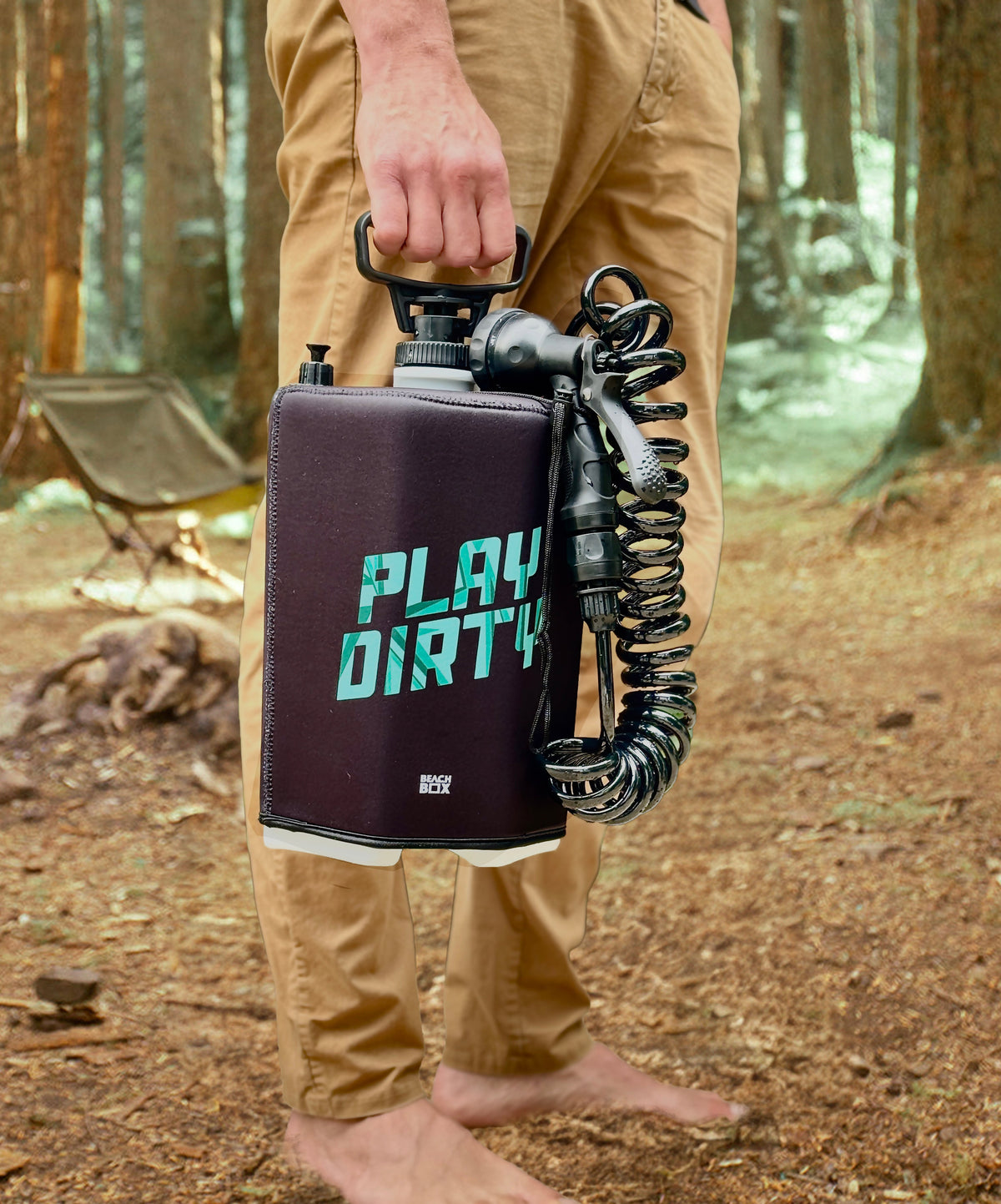
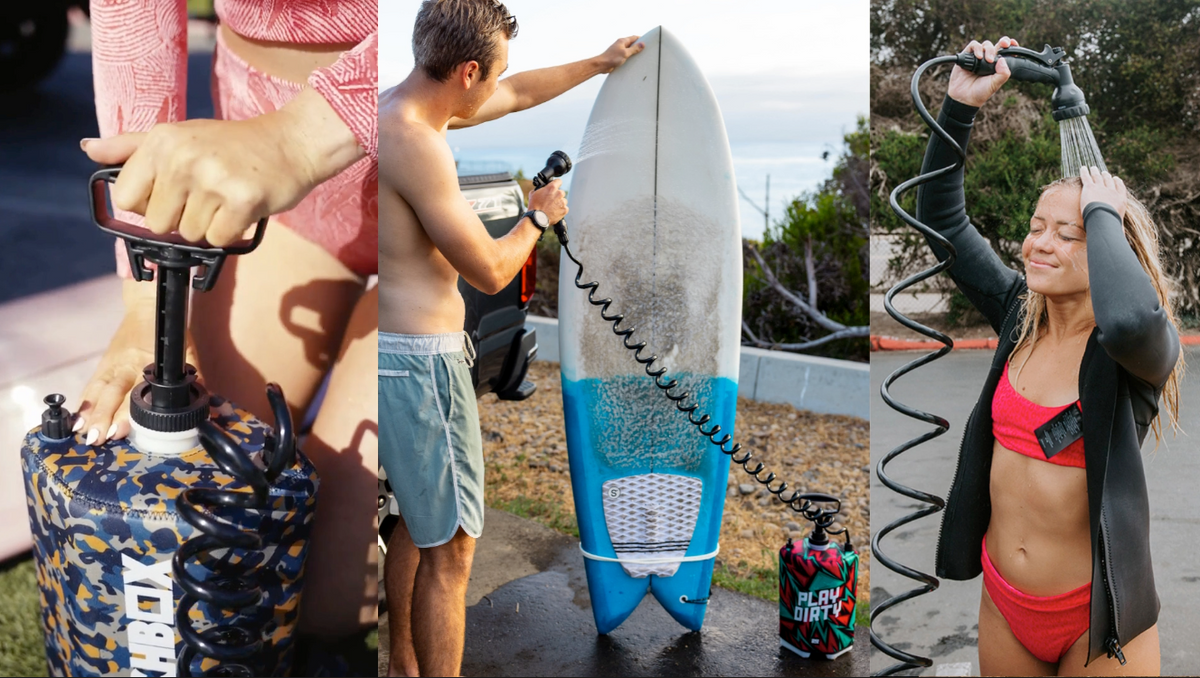
BeachBox is built around this idea. A 5-liter tank with a 33mm neoprene insulating sleeve and a hand pump. Fill it with hot water, throw it behind the driver's seat, pump it when you're ready to rinse. Five spray modes let you go from a wide body rinse to a targeted jet for getting mud out of your hair. No battery, no propane, no dangling bag.
For van life specifically, the compact footprint matters. 5 liters tucks behind a seat, under a bench, or in a side cubby without taking up meaningful storage space.
Best Practices: Making 5 Liters Go Further
A 5-liter tank is a personal rinse — enough for one solid shower if you're efficient. Here's how van lifers and overlanders make it count.
Navy Shower Technique
Wet down, turn off flow, soap up, rinse. You'd be surprised how little water a complete wash actually needs when you're deliberate about it. 5 liters is genuinely enough for hair, body, and feet done this way.
Supplement With a Gym Membership
Planet Fitness is $25/month and has locations near most highways. A lot of van lifers use a combination approach: daily BeachBox rinse for quick off-trail cleanups, gym shower every few days for a full wash. This keeps the portable shower for what it does best — immediate, anywhere, no waiting.
Pre-fill At Every Opportunity
Hot tap at a visitor center, a friend's house, a campground sink. You don't need to fill it at home every time. 5 liters from any hot tap puts you back in business.
Rinse Order Matters
Hair and face first while water is warmest and pressure is highest. Work down. Finish with feet last — they need the least water and you can drop pressure a bit without noticing.
Van Life vs. Overlanding: Does the Use Case Change?
Slightly.
Van life tends to involve more frequent movement — a new spot every night or two, urban and rural mixing, needing something that stores discreetly and works in a Walmart parking lot as much as a forest dispersed site. Compact, quiet, no setup: BeachBox fits this well.
Overlanding often involves longer basecamp stints — parked in one place for several days, more gear to manage, potentially more people. For a solo overlander or a couple, a 5-liter tank works fine. For a group of three or four who want to shower every day from the same basecamp, you'll want either multiple tanks or a higher-capacity solution like a propane heater at camp.
The honest answer: for one or two people moving regularly, BeachBox is the easiest off-grid shower you'll use. For a four-person basecamp expedition, you'll want to supplement or upsize.
Frequently Asked Questions
What is the best portable shower for van life? For solo or duo nomadic van life, an insulated pressurized tank like BeachBox is the most practical option — compact, no power needed, works anywhere you have hot water to fill it. For larger groups on long basecamps, a propane heater setup offers more capacity.
How do van lifers shower? A mix of approaches: portable showers for quick rinses, gym memberships for full showers, campgrounds with facilities when timing works out. The best setups combine a reliable portable option for everyday use with a plan for fuller washes every few days.
Can you use a portable shower for overlanding? Yes. The key is choosing one that doesn't depend on sun, power, or campground infrastructure. An insulated pressurized tank works at any campsite, at any time of day, regardless of weather.
How much water do you need for a shower while camping? A thorough personal rinse takes 4–6 liters using efficient technique (wet, soap, rinse). BeachBox's 5-liter tank is sized exactly for this — one person, one solid wash.
Does a portable shower work in cold weather? Yes, with an insulated tank. The neoprene sleeve on a BeachBox retains heat regardless of ambient temperature — making it more reliable in cold weather than a solar bag, which depends entirely on sun and ambient warmth. The colder it is outside, the more the insulation matters.
What's the difference between a van life shower and an overlanding shower? Mostly a matter of scale and use pattern. Van life tends to favor compact, everyday-carry solutions. Overlanding often allows for larger setups at longer basecamps. The right choice depends on how often you move and how many people you're rinsing.
The Bottom Line
Off-grid showering doesn't have to be complicated. The solutions that require the least setup get used the most — and that's what actually keeps you clean on a long trip.
Fill an insulated tank before you leave, pump it when you're ready, rinse. That's it. No sun required, no battery needed, no propane to run out at 7am on a cold morning.

Leave a comment
This site is protected by hCaptcha and the hCaptcha Privacy Policy and Terms of Service apply.