
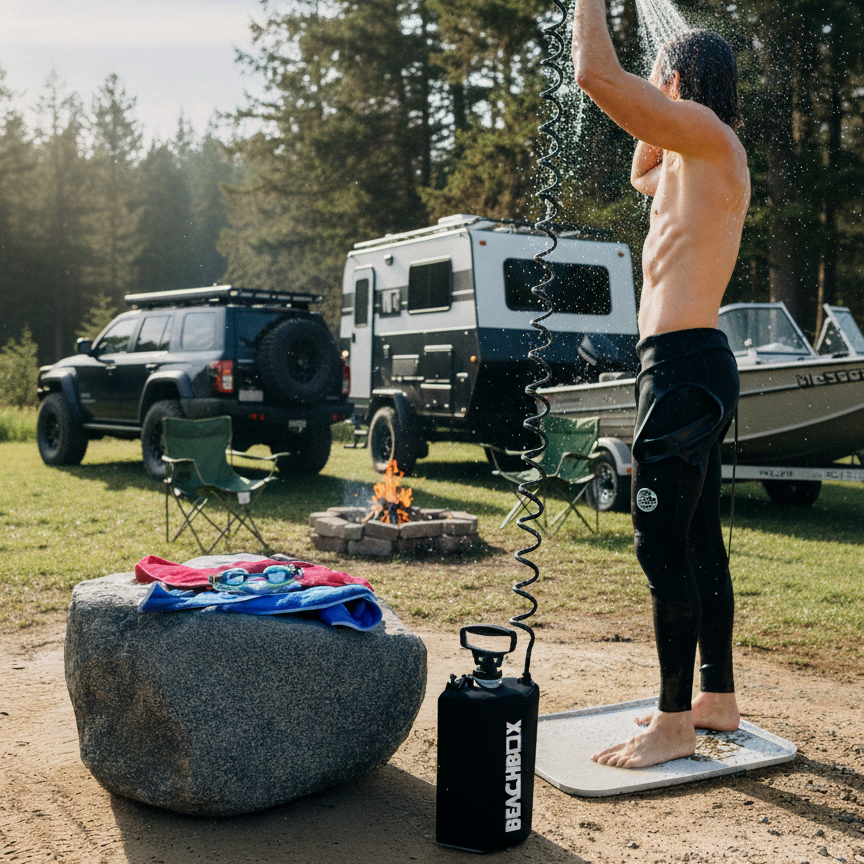
You’ve been rolling dust roads for eight hours. The last camp was three days ago. There’s a river nearby, but it’s 45°F and fast. Your campsite is flat, the fire’s built, and you’re standing there covered in trail grime wondering why you didn’t figure out your shower situation before you left.
This is the exact moment where the difference between a basecamp overlander and a moving-camp overlander becomes painfully obvious — because the right overlanding shower setup for each one is completely different. One type of camper has the space and time to run a solar heating bag or a pump system powered off shore power. The other needs something that works in 90 seconds, fits behind the seat, and doesn’t require a setup ritual.
Neither is wrong. But gear built for one will frustrate the hell out of the other.
What Kind of Overlander Are You?
Before picking any shower system, you need to answer one question honestly: do you stay put, or do you move?
The Basecamp Style
Basecampers pick a spot and live there for 3–7+ days. They run generator power or solar setups. They have room to spread out gear, hang equipment, and build routines. For them, shower infrastructure can get elaborate — larger tanks, shower tents, gravity-fed systems. Setup time is amortized across multiple days, so spending 20 minutes getting a shower dialed in makes sense.
If this is you, you can realistically consider propane-heated systems, larger reservoirs, or solar shower bags that need 2–4 hours of sun exposure to warm up.
The Moving Camp Style
Moving campers cover ground daily or every other day. They break down camp at 7am and are parked somewhere new by 3pm. Every piece of gear has to earn its place, and "setup time" is measured in minutes, not hours. A solar bag you hung this morning won’t be warm by the time you reach camp tonight. A pump system that requires leveling and 15 minutes of assembly creates friction you don’t have time for.
If this is you, your overlanding shower setup needs to be fast, simple, and self-contained.
Why Most Portable Showers Are Built for Basecamps (And Fail On the Move)
The bulk of the overlanding shower market is designed around the basecamp model — even when the product is labeled "portable."
Solar shower bags need sun time. They work great if you hang one at 10am and shower at 4pm at the same campsite. On a moving day, that’s not happening.
Propane water heaters like the Joolca HOTTAP or Camplux units deliver real hot water on demand, but they require a propane canister, water source, hose connection, and somewhere to hang a shower tent. They’re outstanding for a semi-permanent base — the kind of overlanding camp where you’re parked for a week and want a proper shower experience. They’re overkill and heavy for someone doing a hundred-mile route with a new campsite every night.
Pressurized systems like the NEMO Helio work on gravity and air pressure — you fill, pressurize, hang, and shower. The tank holds about 11 liters, weighs 2.5 lbs dry, and gives you about 5–7 minutes of spray at room temperature. Temperature depends entirely on your water source. Cold water source, cold shower.
Each of these systems solves a real problem. Just not the moving-camp problem.
What a Moving-Camp Overlanding Shower Setup Actually Needs
When you’re covering ground daily, your shower system needs to check four boxes:
1. Pre-heated water that travels. You can’t rely on solar heating or fire-heated water once you’re moving. You need a system that holds heat across hours of driving on rough roads.
2. No external power or fuel. Electricity, propane, and solar all introduce dependencies. The simpler the system, the fewer ways it can fail.
3. Small footprint. Real estate in a truck bed, van, or overland build is finite. A shower that lives in a gallon-sized bag is categorically different from one that needs a dedicated box or bracket.
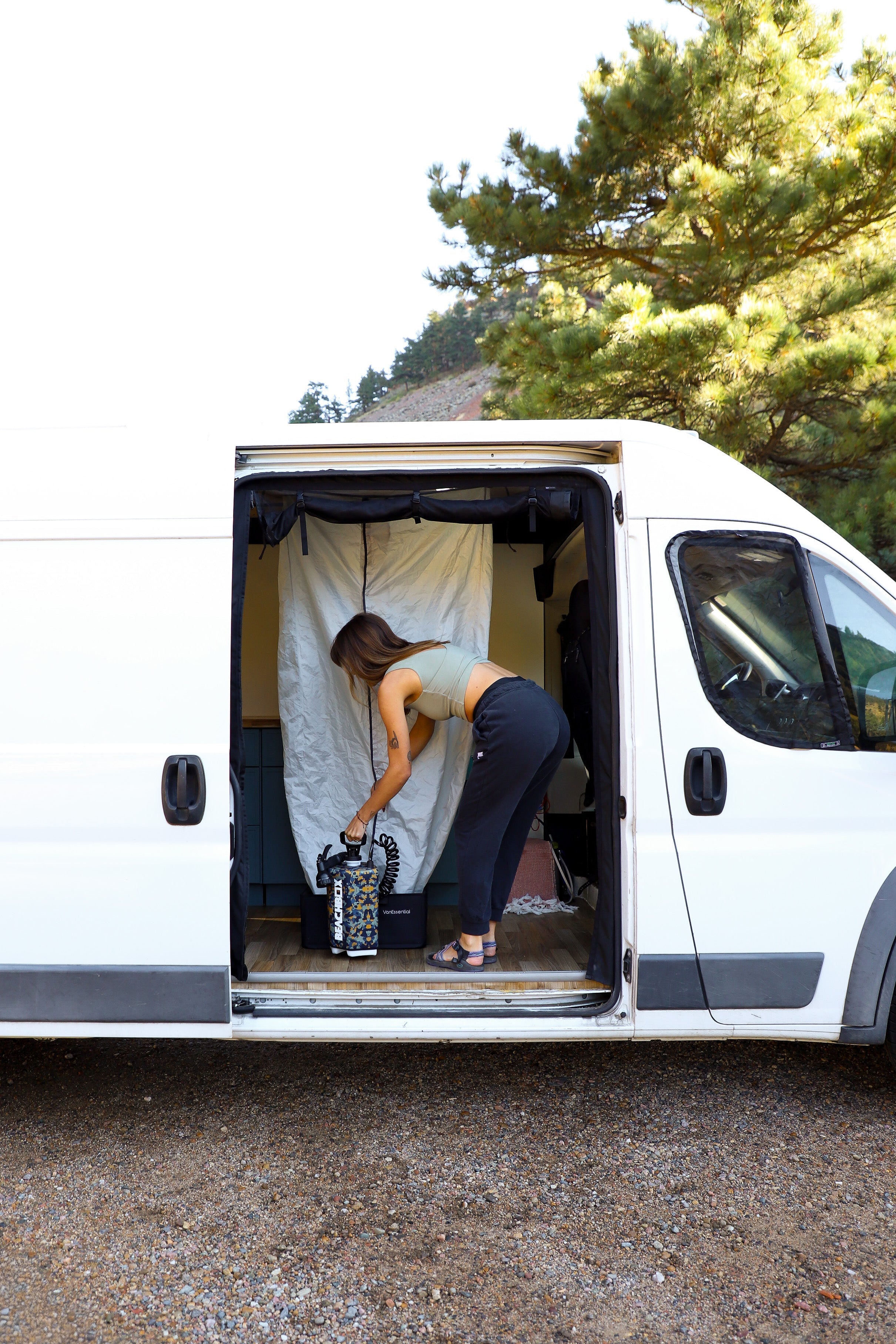
4. Instant readiness. The best shower for a moving camp is one you fill with hot water from your camp kitchen, throw behind the seat, and use three hours later at the next campsite — no setup required.
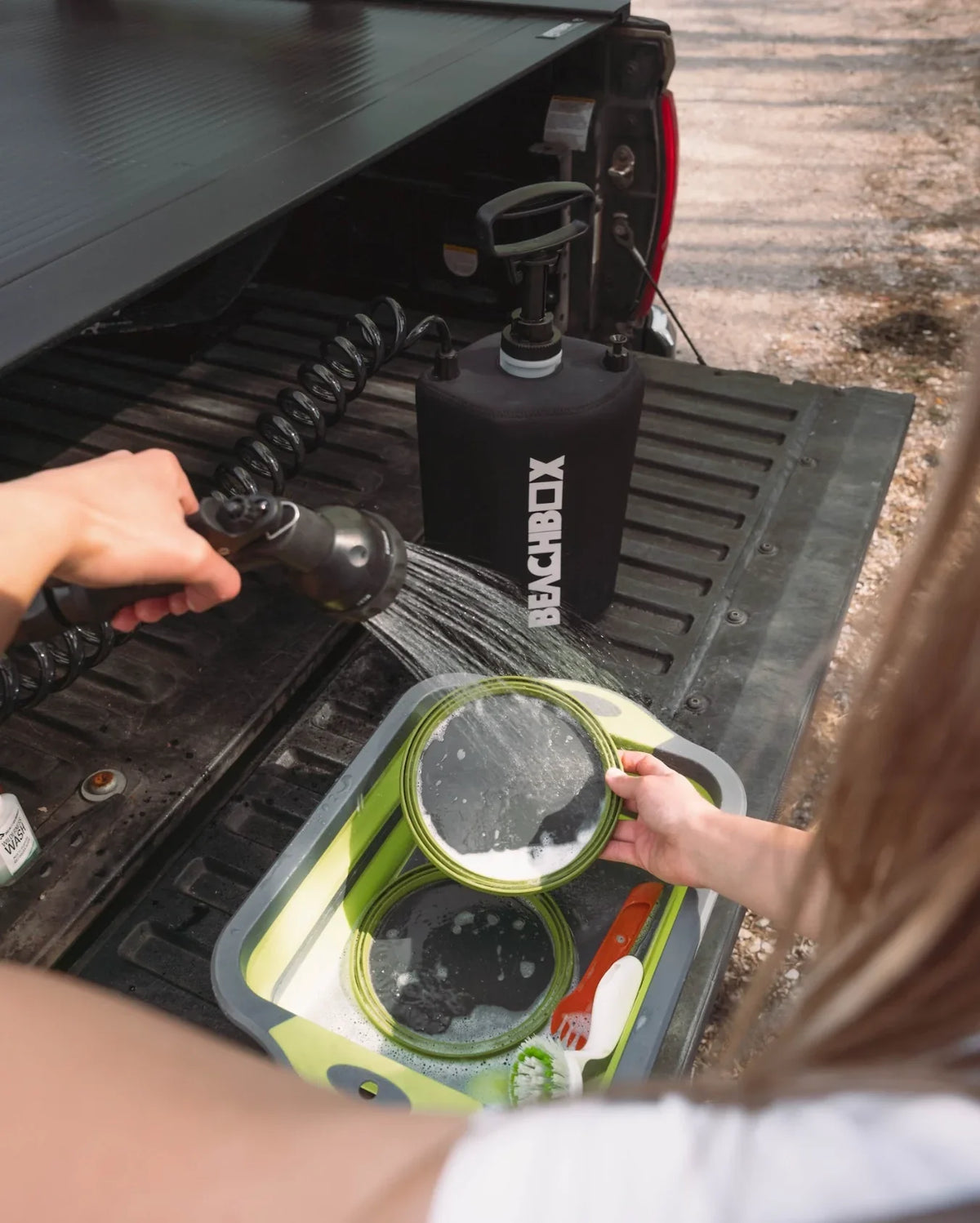
The BeachBox portable shower was built to this brief. It’s a 5-liter insulated tank with 33mm neoprene sleeve. Fill it with hot water from your camp stove or truck stop. The insulation holds that heat for hours while you drive. At camp, hand-pump it, pick from five spray modes, and rinse. Total time from grab to done: under two minutes. No propane, no solar, no electricity, no setup.
It’s not the right tool for a week-long basecamp where you want a proper 10-minute shower. But for moving camp overlanding — where you want to be clean, not ceremonious — it’s the one thing that actually works.
Basecamp Shower Setups Worth Considering
If you’re running a proper basecamp, here are the systems worth looking at:
Joolca HOTTAP Evo — propane-powered instant hot water heater with shower wand. Genuine hot water, adjustable temperature, solid build. Requires propane canister and water bag or hookup. Weight is significant. Best for truck campers and rooftop tent setups with a week+ in one place.
Camplux 5L Portable Propane Water Heater — similar concept to Joolca at a lower price point. Same tradeoffs: propane dependency, hose requirements, setup time.
Nemo Helio LX — the larger version of the Helio, 11-liter pressurized gravity shower. Doesn’t heat water, but the larger capacity gives you more flexibility. Ideal if you’re refilling from a warm water source or want a long rinse at basecamp.
Solar shower bags (various) — 5–20 liter black bags that heat via sun exposure. Cheapest option. Work well in sustained sunshine. No use on cloudy days or moving camps.
None of these are bad choices. They’re just basecamp choices.
Hybrid Overlanders: When You Do Both
A lot of real overlanding trips mix the two styles — moving for the first two days to get deep, then setting up basecamp for the back half of the trip. If this is you, the math is simple: bring both.
A compact moving-camp shower handles the transition days. A solar bag or propane setup handles base. The BeachBox fits in a small stuff sack. It doesn’t compete for space with a bigger system — it fills the gap those systems leave.
Frequently Asked Questions
What’s the best overlanding shower setup for someone who drives to a new campsite daily?
For daily moving camps, you want an insulated tank you can pre-fill with hot water, not a solar bag or propane system that requires on-site setup. The BeachBox 5-liter insulated shower is built for this — fill it with hot water before you leave, and it stays warm for your shower at the next camp.
Can you shower while overlanding without propane or electricity?
Yes. Insulated shower tanks like the BeachBox require no external power source. You heat water on your camp stove or at a truck stop, fill the tank, and the neoprene insulation holds the temperature. Hand-pump pressurizes the spray — no batteries, no fuel.
How much water do you need for a shower while overlanding?
5 liters is enough for a solid rinse — rinse hair, soap down, rinse off. If you’re efficient, you can stretch it further. For a longer shower or multiple people, plan for 10–15 liters. Basecampers near a water source have more flexibility; moving campers should stick to 5 liters and minimize waste.
Is a solar camp shower bag worth it for overlanding?
For basecampers in sunny conditions, yes — they’re cheap and effective. For overlanders who move daily, no. The bag won’t warm up during a drive, and you need sun exposure of 2–4 hours at the same site. A cold or cloudy day means a cold shower or no shower.
What’s the difference between the NEMO Helio and BeachBox for overlanding?
The NEMO Helio is a pressurized gravity shower — great for basecamp use, but it doesn’t heat water, and setup involves filling and pressurizing a hanging bag. BeachBox is pre-filled with hot water and uses neoprene insulation to hold that heat — better for moving camps where you want a fast, no-setup rinse after a long drive.
How long does BeachBox keep water warm?
The 33mm neoprene insulation retains heat for several hours under typical conditions. Fill it with hot tap water or stove-heated water before breaking camp, and it’ll be comfortably warm by the time you reach your next site — even after a few hours of driving.
The Bottom Line
Your overlanding shower setup comes down to one thing: how you camp. Basecampers have the time and space to run propane heaters, solar bags, and gravity systems that deliver a proper shower experience. Moving campers need something that’s always ready, holds heat across a drive, and doesn’t add complexity to a day that’s already full of logistics.
If you’re covering ground daily, the simplest possible system is the right one. Pre-heat water. Load it in an insulated tank. Arrive at camp. Rinse. Move on.

Leave a comment
This site is protected by hCaptcha and the hCaptcha Privacy Policy and Terms of Service apply.