
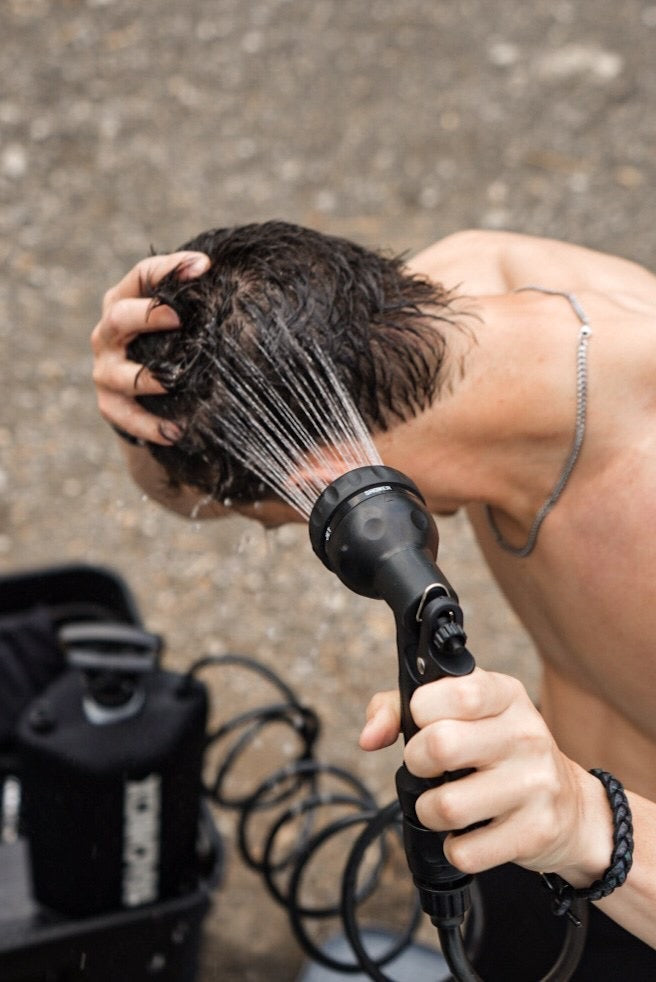
You're two days into a three-day trip. The water jugs are lighter than you planned, dinner still needs doing, and you're standing there doing the math: is there enough left for a shower, or do you go to bed sticky again? Most campers get this calculation wrong in one of two directions — they haul twice the water they need, or they skip washing entirely because they assume a shower takes more than they can spare.
Here's the number that changes the math: your shower at home runs about 17 gallons. A real camp shower — hair, body, rinsed clean — takes 3 to 5 liters. That's roughly one gallon. The difference isn't toughness. It's pressure and flow control, and once you understand how much water each kind of wash actually takes, you can budget for it like you budget fuel.

The Real Numbers: Water by Type of Wash
How much water to shower camping comes down to what kind of clean you're after. These numbers assume a pressurized flow you can start and stop — an open jug or gravity bag wastes more because you can't control it.
Quick rinse — 1.5 to 2 liters
Sweat, sand, or salt off your body, no hair. Wet down, quick scrub with your hands, rinse. This is the after-hike, before-the-sleeping-bag wash, and it's the one you'll do most often. With a controlled spray, two liters is generous.
Full wash with hair — 3 to 5 liters
Wet down, lather with soap, shampoo, rinse everything. The rinse is where the water goes — soap in long hair can take half your supply if you let it. Five liters covers a thorough job for most people; shorter hair comes in closer to three.
Two people, kids, or a dog — plan 2 to 3 liters each
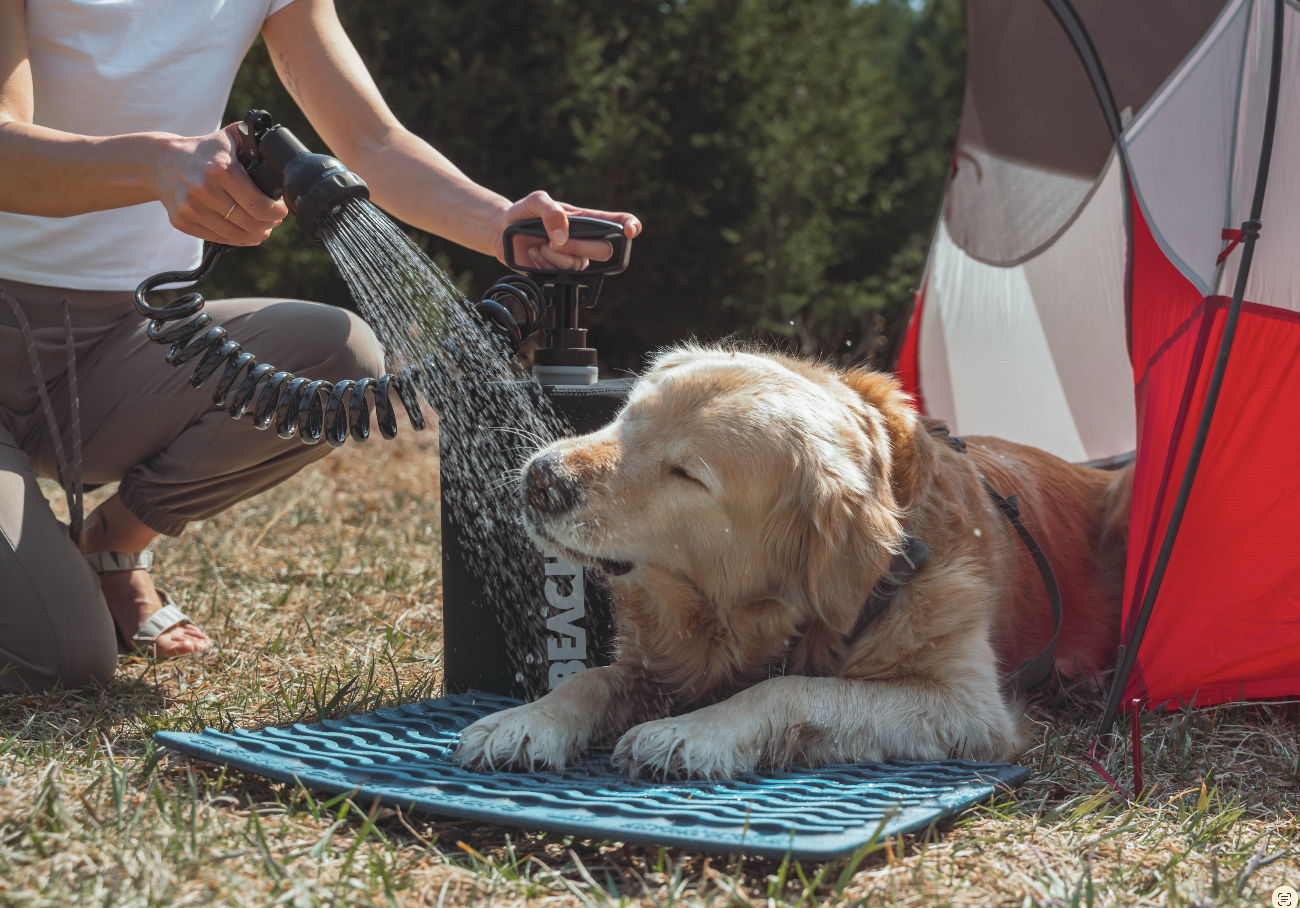
Kids rinse fast because they're small. A sandy dog after a swim takes about two liters if you work fast, more if the coat is thick. Gear — wetsuits, muddy boots, cookware — budget a liter or two on top.
Why Pressure Changes the Math
The reason a home shower burns 17 gallons is that the water never stops running. Flow you can't control is water you can't save.
The old camp solutions all leak water somewhere. Pouring from a jug dumps most of it past you. Gravity bags produce a weak dribble, so you stand there twice as long. A pump shower with a real spray pattern changes it: you pressurize the tank, and the water comes out fast enough to actually rinse soap, through a nozzle you can stop between steps.
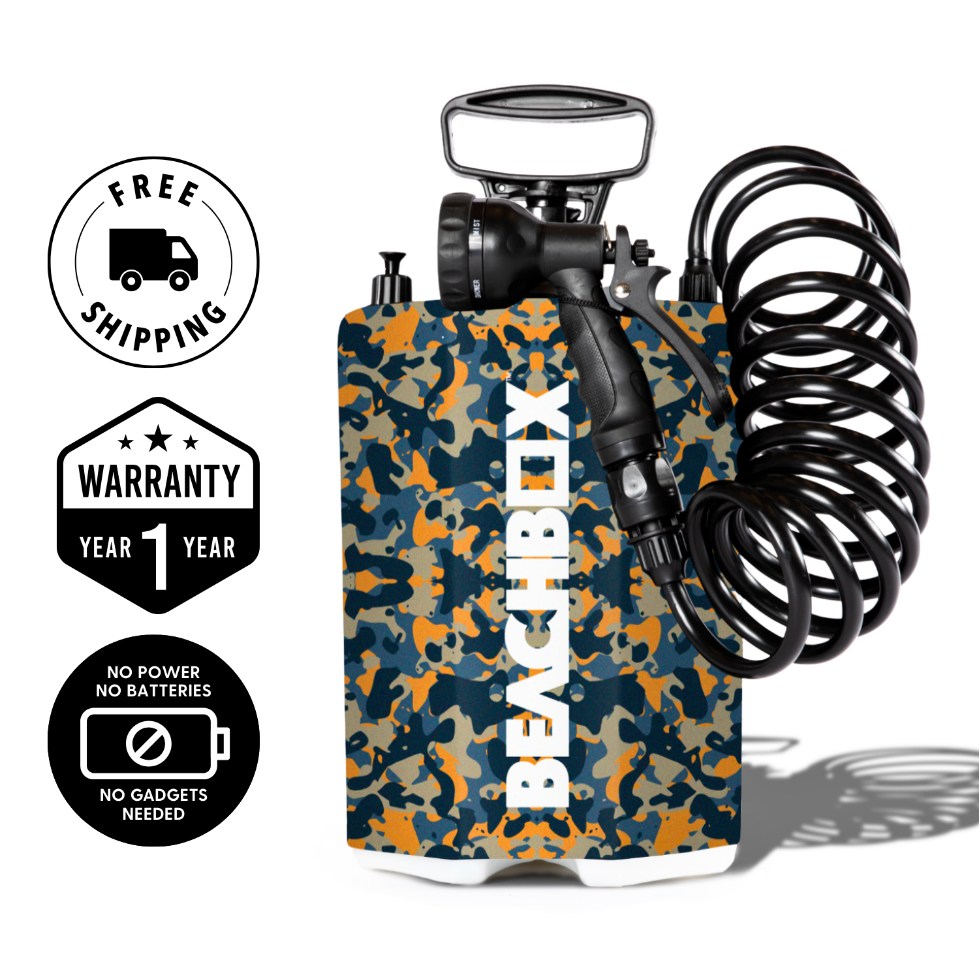
That's the design premise behind the BeachBox shower tank. It holds 5 liters — the exact top end of a full wash — pressurizes to 40–50 PSI with 15–20 hand pumps, and the spray gun has five modes, so you can run a wide pattern to wet down and a tighter one to rinse. No battery, no hose hookup, no waiting on the sun. And because the tank wears a neoprene sleeve, water you fill warm stays warm for an hour or two — fill it before you leave the trailhead and the shower at camp is still comfortable.
The Navy Shower: Make 5 Liters Feel Like 20
The technique matters as much as the gear. The Navy figured this out on ships where fresh water was rationed:
- Wet down fast — 30 seconds of spray, head to toe. Then stop the water.
- Lather everything with the water off. Soap, shampoo, scrub. This is where most people waste water at home — the tap runs while they scrub.
- Rinse top-down. Start at your hair and let gravity do the lower half for free. Water off between passes if you need to re-scrub.
Done this way, a full wash lands in the 3-liter range reliably. One fill of a 5-liter tank, and you're not even using all of it.
Two habits stretch it further. Use biodegradable soap sparingly — less lather means less rinse water, and it's the responsible choice anyway (wash 200 feet from lakes and streams, per Leave No Trace). And if campground rules allow it, check our guide to where outdoor showers are actually permitted before you set up.
Budgeting Water for the Whole Trip
Standard planning figure: 2 gallons (7.5 liters) per person per day for drinking and cooking. That's before washing. For a weekend car camp for two, the math looks like this:
- Drinking and cooking: 2 people × 2 days × 7.5L = 30 liters
- Showers: one full wash each per day, 2 × 2 × 4L = 16 liters
- Buffer for dishes, dog, spills: 5–8 liters
Call it 50–55 liters total. The shower portion is under a third of the budget — which surprises people who've been skipping the wash to "save water" while boiling three liters for pasta. If you're near a lake or river, you can swim to get the worst off and use your carried water only for the soap-and-rinse, cutting the shower budget in half.
For longer off-grid runs, water strategy gets more involved — refill points, storage, greywater — and we've covered that in our off-grid water guide for van life.
Frequently Asked Questions
Is 5 liters of water enough for a shower?
Yes — for one person, comfortably. Using stop-start technique (wet down, water off, lather, rinse), a full wash including hair takes 3 to 5 liters. A body-only rinse takes under 2 liters, so a 5-liter tank can handle two quick rinses or one thorough shower per fill.
How do you shower with limited water when camping?
Use the Navy shower method: wet down for 30 seconds, turn the water off while you soap and scrub, then rinse top-down. Pair it with a pressurized shower that lets you stop flow instantly — the technique doesn't work with a gravity bag or poured jug because you can't control the flow.
How long does a 5-liter camping shower last?
Depends on the spray mode, but expect 3 to 6 minutes of actual spray time from a pressurized 5-liter tank. Run stop-start and that's more than a full shower's worth — most people finish a complete wash with water left in the tank.
Can you wash your hair with a portable camping shower?
Yes. Hair is the most water-hungry part of a camp shower — budget 1 to 2 extra liters for the rinse, more for long or thick hair. Wet it first, lather with the water off, and rinse with a focused spray pattern to push soap out instead of just soaking it.
How much water should I bring camping per person per day?
Plan 2 gallons (about 7.5 liters) per person per day for drinking and cooking, then add 2 to 4 liters per person per day if you want a daily wash. Adjust up for heat, altitude, and strenuous hiking — dehydration risk beats shower comfort every time.
The Bottom Line
A camp shower doesn't cost 17 gallons — that's a home-plumbing habit, not a requirement. With pressure you can control and the stop-start technique, a real wash costs 3 to 5 liters, and a quick rinse costs less than a large water bottle. Once you know that, there's no reason to end a camp day dirty.
Budget it like fuel: 7.5 liters per person per day for drinking and cooking, a few more for washing, and a small buffer. The shower is the cheapest line item on the list — and the one that most changes how the trip feels on day three.
If you want the version of this that's already dialed — 5 liters, pressurized, insulated so warm water stays warm — take a look at the BeachBox, or browse all portable shower tanks.
Shop BeachBox Portable Showers →

Leave a comment
This site is protected by hCaptcha and the hCaptcha Privacy Policy and Terms of Service apply.