
Heated vs Pressurized Camping Showers: What's the Difference?
You're three days into a camping trip. Your hair has reached the point where a hat is no longer optional, and the lake you swam in this morning left you smelling like weed and duck. So you pull out your phone at the picnic table and start searching for the best camping shower, and within two minutes you're drowning in jargon: heated, pressurized, solar, propane, 12V, gravity-fed.
Here's the thing nobody tells you upfront: almost every camping shower on the market falls into one of two camps. It either heats your water, or it pressurizes it. Very few do both, and the ones that try usually cost a fortune or require you to haul propane bottles and batteries around.
This guide breaks down how each type actually works, what they cost, where they fail, and how to pick the right one for how you actually camp.
The Two Categories, Explained
Heated camping showers: they make warm water, with strings attached
Heated showers generate warmth on site. There are three main approaches:
Propane heaters like the Joolca HOTTAP and Camplux systems run water past a gas burner. They deliver endless hot water, which is great for a family basecamp. The trade-off: you're carrying a propane bottle, a pump, a battery or 12V connection, and a unit that needs setup and ventilation. Expect $150 to $400 plus fuel.
Electric heaters like Geyser Systems warm a small reservoir off your vehicle's 12V socket. Compact, but slow, and they tether you to your car's battery.
Solar bags are the budget option: a black PVC bag you leave in the sun. They cost $20 to $40 and work fine if you have three to four hours of direct sunlight, a place to hang 20 pounds of water, and no schedule. Cloudy day? Cold shower.
Pressurized camping showers: they push water, usually cold
Pressurized showers store water in a sealed tank and use a pump (hand, foot, or electric) to build pressure, so you get a real spray instead of a dribble. The NEMO Helio uses a foot pump. RinseKit uses a pressurized chamber you charge from a hose or included pump.
Pressure solves the biggest complaint about gravity and solar bags: flow. You can actually rinse shampoo out of your hair or blast sand off a wetsuit. What pressure alone doesn't solve is temperature. Most pressurized showers are uninsulated plastic tanks. Fill one with hot water and it's lukewarm within the hour. RinseKit's answer is the HeatKit, a plug-in heating accessory that costs over $100 on top of the shower itself. We've broken that math down in our BeachBox vs RinseKit comparison.
Side-by-Side: How the Types Compare
| Solar bag | Propane heated | Pressurized (uninsulated) | Insulated + pressurized | |
|---|---|---|---|---|
| Warm water | Sun-dependent | Yes, on demand | No (or paid add-on) | Yes, fill and it stays warm |
| Water pressure | Gravity dribble | Pump-driven | Good | Good |
| Power needed | None | Propane + battery | None to some | None |
| Setup time | 3-4 hrs in sun | 10-15 min | 1-2 min | 1-2 min |
| Weight/bulk | Light but awkward | Heavy, multiple parts | Moderate | Moderate |
| Typical cost | $20-40 | $150-400 + fuel | $90-230 + $100 heater | $120 |
The pattern is clear: heat and pressure have traditionally been an either/or choice, and getting both meant stacking accessories or hauling fuel.
The Third Option: Insulation Instead of a Heater
There's a simpler way to get a warm, pressurized shower, and it borrows from something you already own: a coffee thermos. Don't generate heat at camp. Bring it with you and keep it.
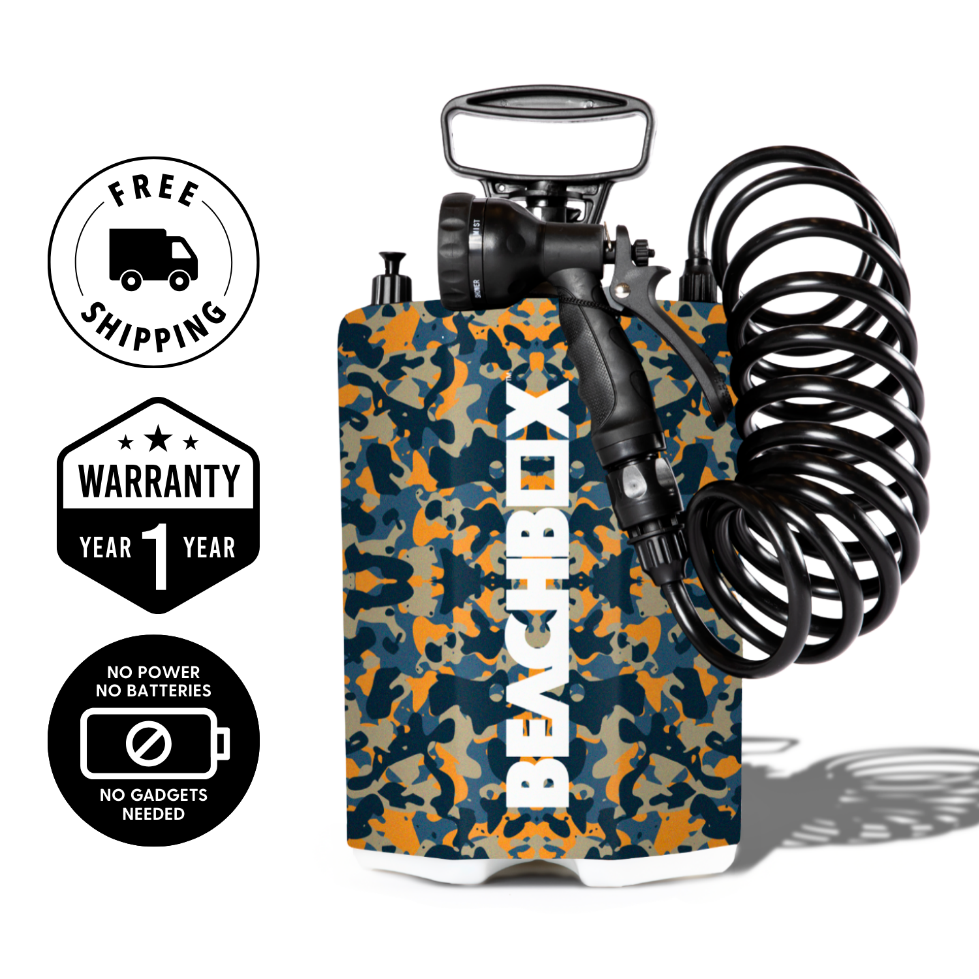
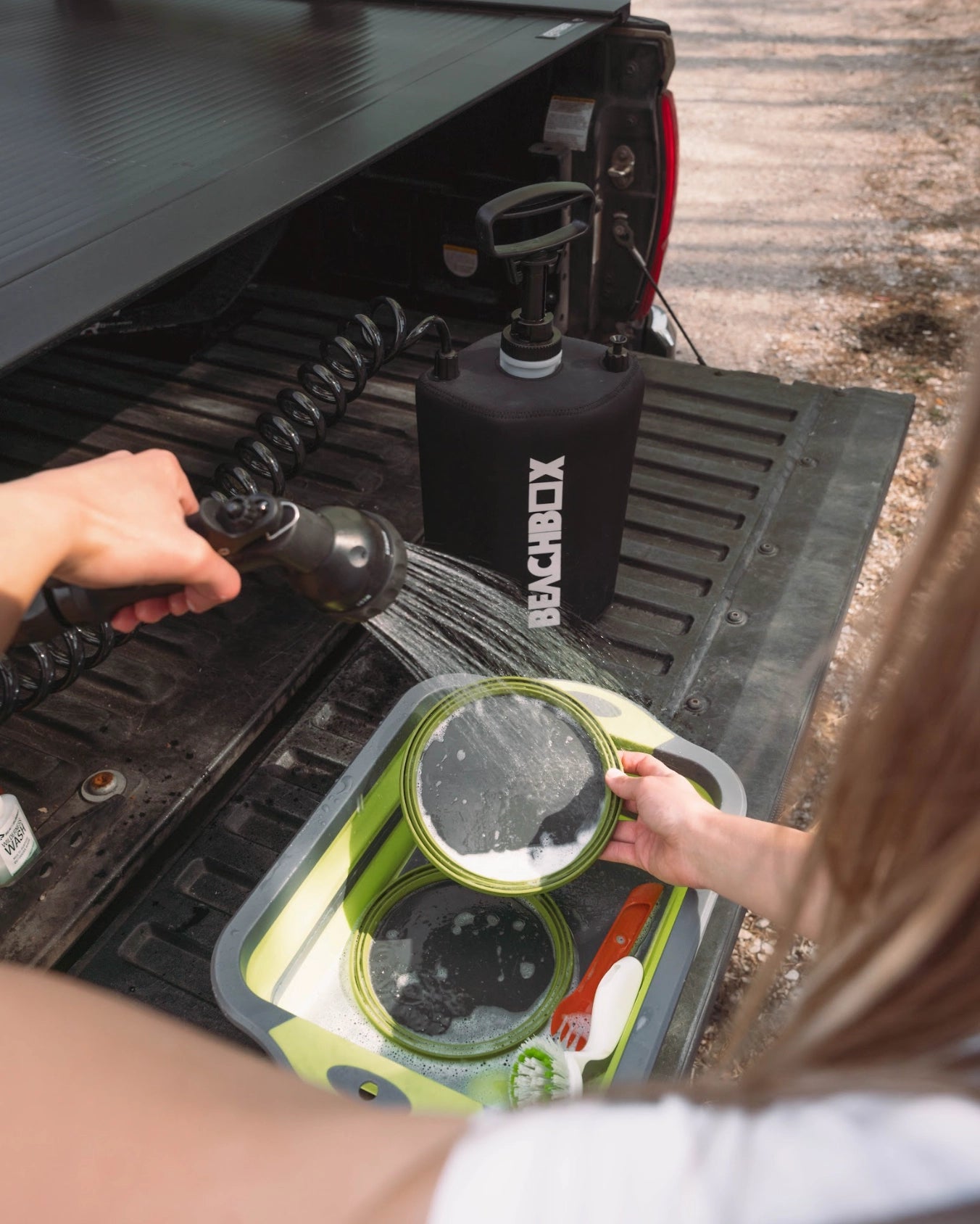
That's the approach behind the BeachBox shower tank. It's a 5-liter pressurized tank wrapped in a 33mm neoprene sleeve, the same material as a wetsuit. Fill it with hot water at home, at a campground tap, or from a kettle, and the insulation holds the warmth until you need it. A built-in hand pump builds pressure, and five spray modes cover everything from a full rinse to a gentle mist.
What you skip entirely: propane bottles, batteries, solar-charging windows, heater accessories, and hoses. There's nothing to break, nothing to fuel, and nothing to plug in. At $120, it costs less than a RinseKit plus HeatKit combo, and less than any propane system before you've bought fuel.
The honest limitation: 5 liters is a rinse-off, not a 20-minute hotel shower. It's built for washing off sweat, sand, salt, and trail dust, which covers what most campers actually need. If you're running a semi-permanent basecamp for six people, a propane system earns its complexity. For everyone else, it's overkill.
Which Type Should You Buy?
Match the shower to how you camp, not to the spec sheet.
| How you camp | Best fit | Why |
|---|---|---|
| Weekend car camping | Insulated + pressurized | Fast setup, warm water, no fuel to manage |
| Family basecamp, 5+ days | Propane heated | Endless hot water justifies the setup |
| Backpacking | Solar bag (or wipes) | Weight rules everything |
| Beach days and day trips | Insulated + pressurized | Fill at home, shower warm at the car |
| Van life, moving daily | Insulated + pressurized | No mounting, no plumbing, stows anywhere |
If you land in the insulated and pressurized column, you can compare sizes and bundles across the full range of portable shower tanks.
One more thing worth checking before you buy any shower: whether your campground allows outdoor showers at all. Rules vary more than you'd expect, and we've covered which campgrounds allow outdoor showers in a separate guide.
Frequently Asked Questions
Are heated camping showers worth it?
For long stays with a group, yes. A propane system gives you unlimited hot water for washing people, dishes, and gear. For weekend trips and day use, the setup time, fuel cost, and bulk usually outweigh the benefit, and an insulated tank filled with hot water covers the same need with none of the hassle.
How do pressurized camping showers work?
A sealed tank holds your water, and a pump (hand, foot, or electric) forces air into the tank to build pressure. Open the nozzle and the pressure pushes water out in a steady spray. No hanging, no gravity, no hose connection required.
How long does water stay hot in an insulated camping shower?
In a 33mm neoprene-insulated tank like the BeachBox, water filled hot in the morning is still warm for a shower that afternoon, several hours later. Uninsulated plastic tanks lose their heat much faster, often within an hour in cool weather.
Is a solar shower or a pressurized shower better?
They solve different problems. A solar bag makes warm water cheaply but delivers it as a weak gravity dribble and needs hours of sun. A pressurized shower gives you real spray force on demand. If you want both warmth and pressure, use an insulated pressurized tank filled with hot water.
How much water do you need for a camping shower?
About 4 to 6 liters covers a proper rinse: wet down, soap up, rinse off. The trick is a shower with spray modes that control flow, so you're not dumping water while you lather. A 5-liter tank comfortably handles one full shower or several quick rinses.
Can you put hot water straight into a camping shower?
Check the manufacturer's rating first. Most quality tanks accept hot tap water around 40 to 45°C, which is ideal shower temperature. Never pour boiling water into any portable shower; it can damage seals and plastic, and it's a scald risk.
The Bottom Line
The heated vs pressurized question is really a question about trade-offs. Heated showers give you warmth but demand fuel, power, setup time, and money. Pressurized showers give you usable spray but usually leave you shivering.
The workaround most campers land on after trying both: skip the heater, keep the pressure, and let insulation do the work. Fill an insulated pressurized tank with hot water before you leave, and you get a warm shower with real pressure anywhere, with zero moving parts beyond a hand pump.
That's the problem BeachBox was built to solve. One tank, one pump, five spray modes, warm water all day. No propane, no batteries, no waiting on the sun.

Leave a comment
This site is protected by hCaptcha and the hCaptcha Privacy Policy and Terms of Service apply.