
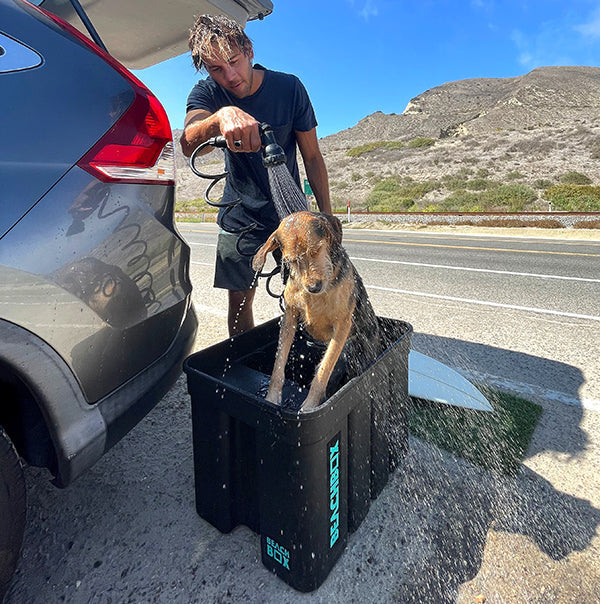
Your dog just had the best hour of his week. He swam, he rolled, he found something dead and wore it home. Now he's standing at the tailgate covered in salt and sand, and you have two options: let him shake it all over the back seat, or drive home with the windows down pretending it's fine.
Neither of those is a plan. A portable dog wash is — and it costs less than one professional groom.
The trick is knowing what "portable dog wash" actually needs to mean for a wet, sandy dog at a trailhead. Most of the gear sold under that name is either a wobbly gravity bag or a scrub brush with a hose fitting that assumes you have a hose. Neither works in a parking lot.

What Makes a Portable Dog Wash Actually Work
Rinsing a dog is a different job than rinsing yourself, and the gear requirements are different too.
Enough pressure to move sand out of a coat
This is the one that separates real solutions from wishful ones. Sand doesn't sit on top of fur — it works down to the skin, and a trickle of water just wets it in place. You need flow with some push behind it to flush sand out from the undercoat, especially on double-coated breeds. A gravity bag hung off a car door produces a dribble. You'll empty the whole bag and still find grit behind his ears.
Water you can stop instantly
Dogs move. The moment you turn a running stream on a dog and then need both hands, you're wasting water and soaking your shoes. A trigger you can release between passes matters more with a dog than it does with a person.
Warm water, or at least not shocking cold
A cold blast is how a dog learns to hate the tailgate. Lukewarm water keeps him standing still, which is the entire game. Dogs that tolerate the rinse get rinsed; dogs that bolt get towel-scrubbed badly and shed sand in the car for a month.
No hookup, no power, no waiting
If the setup needs a spigot, an outlet, or two hours of sun, it isn't portable — it's just a shower that lives in your trunk.
The Setup We Built For This
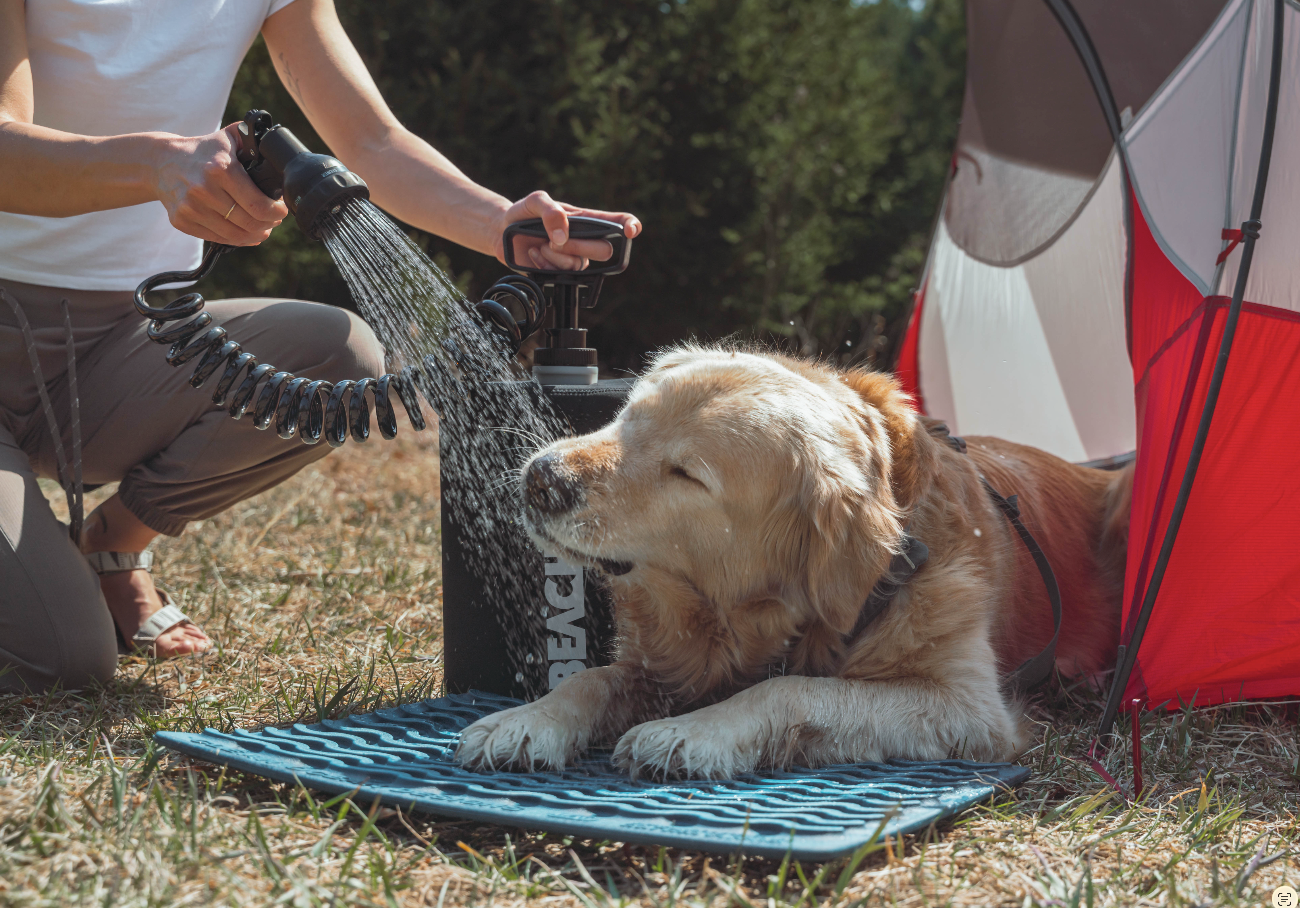
The BeachBox portable shower tank was designed for people rinsing off at the car, and dog owners turned out to be one of the biggest groups using it.
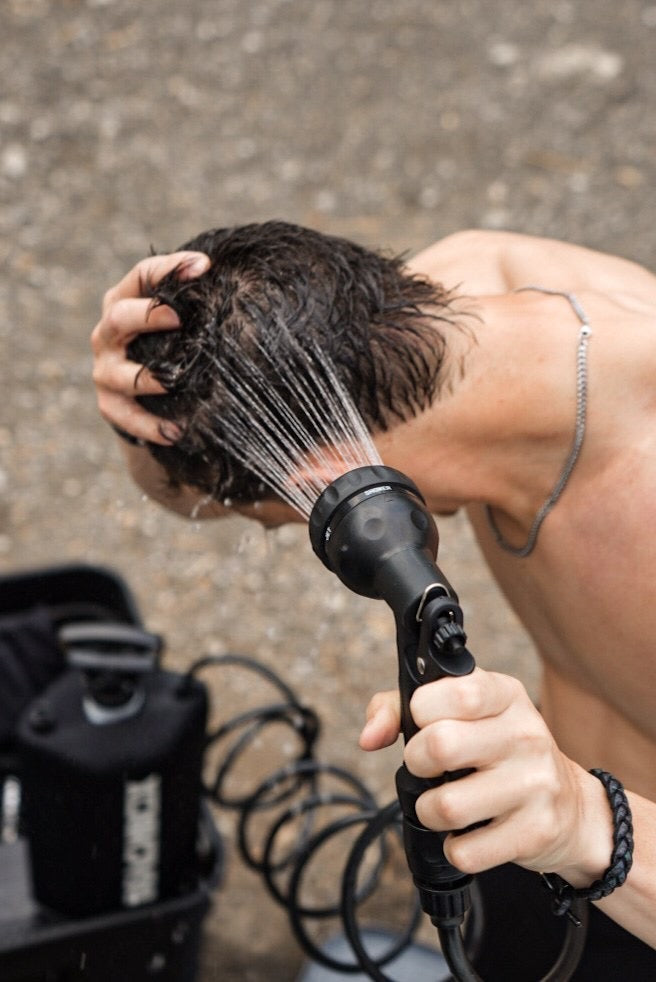
It holds 5 liters. You pressurize it with 15 to 20 strokes of the hand pump — no battery, no hose, no power — and the multi-spray gun gives you five patterns, so you can use a wide spray to wet the coat down and a tighter one to push sand out of the thick spots. Release the trigger and the water stops dead. Pump it again when pressure drops.
The neoprene sleeve is the part dog owners tend to appreciate most. Fill the tank with warm water from your kitchen tap before you leave, and it's still comfortable when you get back to the car — usually for an hour or two. This is not a solar shower and it doesn't heat water on its own; the insulation just keeps the warmth you put in. That's the difference between a dog who stands there and a dog who's already halfway across the lot.
One honest caveat: this is a rinse, not a power washer. It will flush salt, sand, lake water, and light mud out of a coat, and it will handle a full soap-and-rinse on a medium dog. It will not blast caked mud off a Newfoundland who's been in a bog. Know which job you're doing.
How to Rinse a Dog Without Making a Mess
The order matters. Get it wrong and you're wearing most of it.
- Leash him to something first. A wet dog's first instinct is to leave. Tailgate, bumper, tree — anywhere but your wrist.
- Start at the shoulders, not the head. Water on the face triggers the shake reflex immediately. Work back and down, save the head for last, and use the wide spray pattern up there.
- Let him shake on purpose. Step back, give him room, and let it happen once mid-rinse. He's going to do it anyway; better in the open than in the hatchback.
- Rinse the belly and paws last. That's where sand collects and where it ends up on your seats. Lift each paw and hit between the pads.
- Towel the legs, air-dry the body. Legs and belly are what touch upholstery. The back can drip.
For a straight saltwater or sand rinse, skip soap entirely — fresh water is enough, and frequent shampooing strips the coat's oils. Save the soap for actual mud or the dead-thing incident, and use a dog-specific product. Human shampoo is the wrong pH for a dog's skin.
Water budget: about 2 liters for a medium dog if you work efficiently, 3 or more for a thick double coat. One 5-liter fill handles most dogs with water left for your own feet. We broke the full water math down in our guide to how much water a shower actually takes.
Where a Portable Dog Wash Earns Its Keep
The beach. Salt left in a coat dries into an itchy crust and gets licked off. A 60-second rinse at the car prevents both.
Trailheads. Creek mud, pond water, and whatever he rolled in at mile four. Also worth rinsing paws after road-salted or chemically treated ground.
After a lake swim. Algae and stagnant water are the smell people actually complain about, and it's much easier to remove wet than dry.
Post-groom maintenance and muddy yards. A quick paw rinse at the back door on a wet week saves the floors.
Camping with a dog. This is where it stops being a convenience. A sandy dog in a tent ruins two nights of sleep. If you're heading out with the dog, our family beach setup guide and off-grid water tips cover the rest of the water logistics.
What About the Other Options?
Gravity/solar bags ($20–40). Cheap, and the low pressure is the whole problem. Fine for wetting a dog down, poor at getting sand out. Also needs somewhere to hang, which parking lots rarely provide.
12V pump systems ($60–150). Real pressure, but they draw from your battery and involve a pump, a hose, and a bucket. More parts to fail, more setup time, and you can't walk away from the car with it.
Hose-fed dog wash attachments ($25–50). Genuinely good — at home. Useless at the beach, which is where the dog gets dirty.
Wipes and waterless shampoo. Worth keeping in the glovebox for a small mess. They don't remove sand; they redistribute it.
Pressurized hand-pump tanks (like the BeachBox, $120). Highest cost of the group, no power or hookup needed, pressure that actually moves sand, and it does double duty rinsing you, your gear, your kid, and your board. If it's only ever going to wash the dog, a hose attachment at home is cheaper. If it's going in the car for everything, this is the one that gets used.
Frequently Asked Questions
What is the best portable dog wash for the beach?
A pressurized hand-pump shower tank is the most practical option, because it works with no hose, no power, and no place to hang a bag. Look for at least 4–5 liters of capacity, an adjustable spray nozzle with a trigger you can release between passes, and insulation so you can carry warm water from home rather than shocking the dog with cold.
How much water does it take to rinse a dog?
About 2 liters for a medium short-haired dog getting a plain salt-and-sand rinse, and 3 to 4 liters for a thick or double coat, or any dog getting soaped and rinsed. A 5-liter tank covers almost any single dog with water to spare.
Can you use a portable shower to wash a dog with soap?
Yes — use a dog-specific shampoo, not human shampoo, which has the wrong pH for canine skin. Wet the coat, turn the water off while you lather, then rinse thoroughly; leftover soap causes more itching than the dirt did. For a plain saltwater or sand rinse, skip soap altogether.
How do you keep a dog from shaking water everywhere?
You don't, entirely — but you can control when. Leash the dog to a fixed point, start rinsing at the shoulders instead of the head, and deliberately step back and let one shake happen mid-rinse in open space. Save the head for last, since face contact is what triggers the reflex.
Is cold water bad for dogs after swimming?
It isn't harmful for a healthy adult dog in mild weather, but it makes the rinse much harder because most dogs won't stand still for it. Lukewarm water keeps the dog calm and the job quick. Be more careful with puppies, seniors, and small or thin-coated breeds in cool conditions.
Do I need to rinse my dog after every beach trip?
Rinsing with plain fresh water after every saltwater or lake swim is worth it — salt and algae dry into the coat and get licked off, and both cause skin irritation. Shampooing every time is not; frequent washing strips the natural oils that keep the coat healthy.
Ready to stop driving home with a sandy dog? The BeachBox Portable Shower Tank holds 5 liters, pressurizes by hand in about 20 pumps, and keeps warm water warm on the drive out. Free U.S. shipping.

Leave a comment
This site is protected by hCaptcha and the hCaptcha Privacy Policy and Terms of Service apply.