
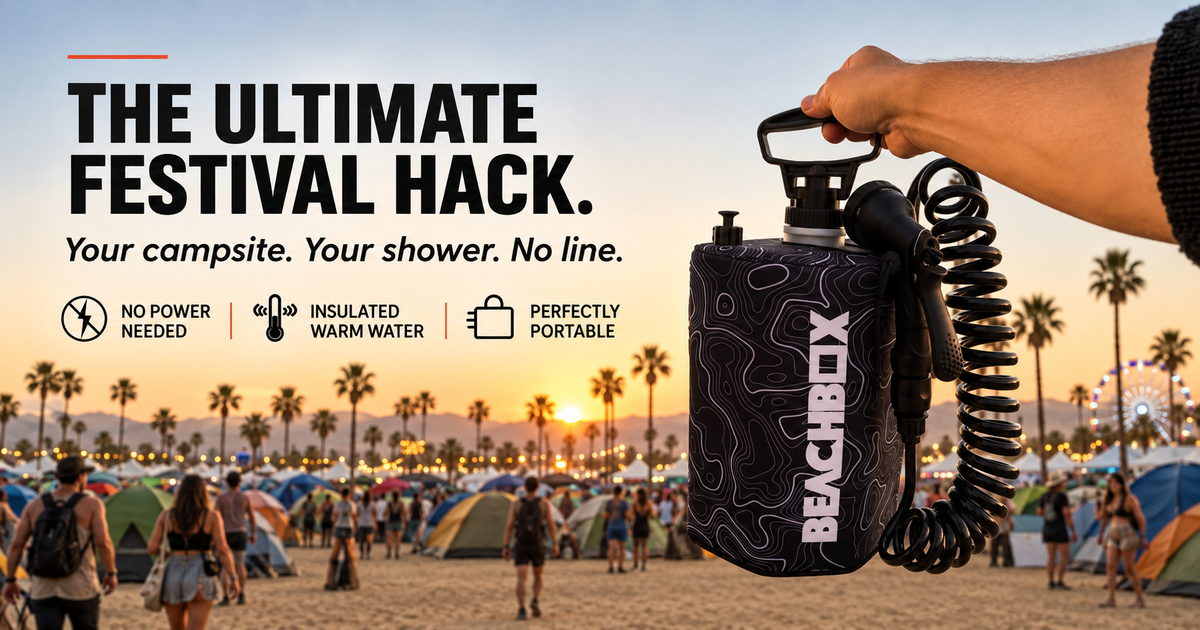
It's day three. Your hair has developed structural integrity. There's a fine layer of dust bonded to your legs that no amount of wiping seems to touch, and the sunscreen you applied on day one has become part of your skin. The official shower trailer is a ninety-minute line in full sun, and it costs ten bucks — assuming they haven't run out of hot water by the time you get to the front.
So you do what most people do: you skip it. Again.
Here's the thing nobody tells you about multi-day festivals — staying clean isn't about finding a proper shower. It's about getting the grime off often enough that you don't spend the back half of the weekend feeling like a walking laundry pile. That's a much easier problem to solve, and it doesn't require standing in a line at all.
Why festival showers are a bad deal
Festival shower infrastructure is built for a fraction of the people who need it. Bonnaroo charges around $10 per shower, and reports from campers regularly describe peak-hour waits stretching past an hour. Electric Forest and most other big camping festivals run similar pay-per-use trailers at comparable prices.
Do the math on a four-day weekend. Two showers a day for two people is $160 and potentially six hours of your life spent standing in a queue instead of watching music. And the trailers are busiest exactly when you want them: early morning before sets, and late evening when everyone comes off the field caked in dust.
The alternative most people fall back on is baby wipes, which work fine for about a day and then stop being enough. Wipes move dirt around. They don't rinse anything off.
The five-minute rinse that actually works
The move is to bring your own water and rinse at your campsite. Not a full shower — a rinse. It sounds like a compromise until you try it and realize that most of what you want from a festival shower is just getting the dust and sweat off your skin and hair.
Pick your window
Rinse when the campground is quiet. Mid-morning after the early risers have cleared out, or during the mid-afternoon lull when most people are at the main stage, gives you space and privacy without a crowd forming around your tent.
The single best time is right after you come off the field for the night. Getting the day's dust off before you get into your sleeping bag is the difference between waking up feeling human and waking up feeling like you slept in a fire pit.
Where to set up
You need three things: a spot where water can drain away from tents, something to stand on, and some kind of privacy. A cheap pop-up changing tent solves the third one for about $30 and packs down to the size of a frisbee. If you didn't bring one, park between two vehicles or hang a tarp off your canopy.
Stand on a mat, a towel, or flip-flops — not directly on the ground. The whole point is to get clean, and bare feet in festival mud undoes the last two minutes of work.
The order of operations
Run it top to bottom, and be efficient. Wet your hair and body first with a short burst. Turn the water off. Soap up with a biodegradable, low-suds body wash — you want something that rinses out fast, not something that lathers luxuriously. Then rinse from the head down in one continuous pass.
Done in this order, an adult rinse takes well under two minutes of actual running water. Face, pits, feet and hair are where the payoff is. Everything else is optional.
What a portable shower gives you that wipes don't
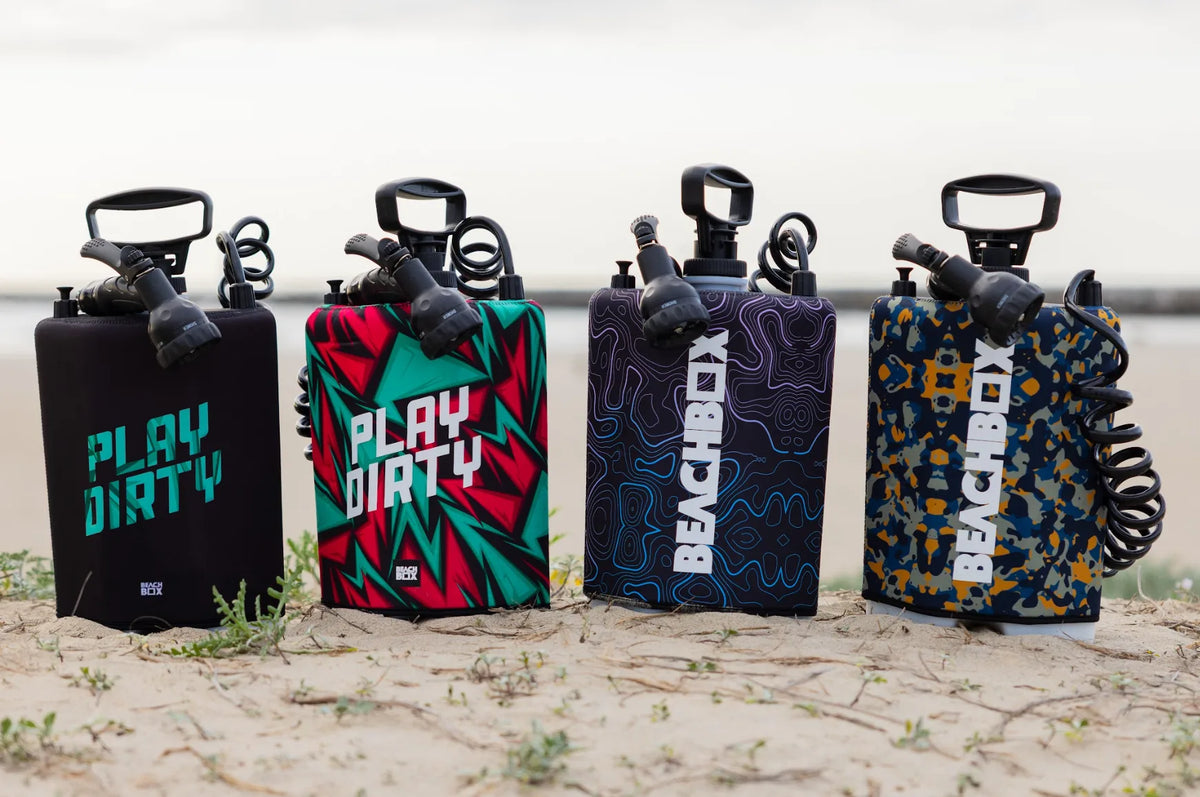
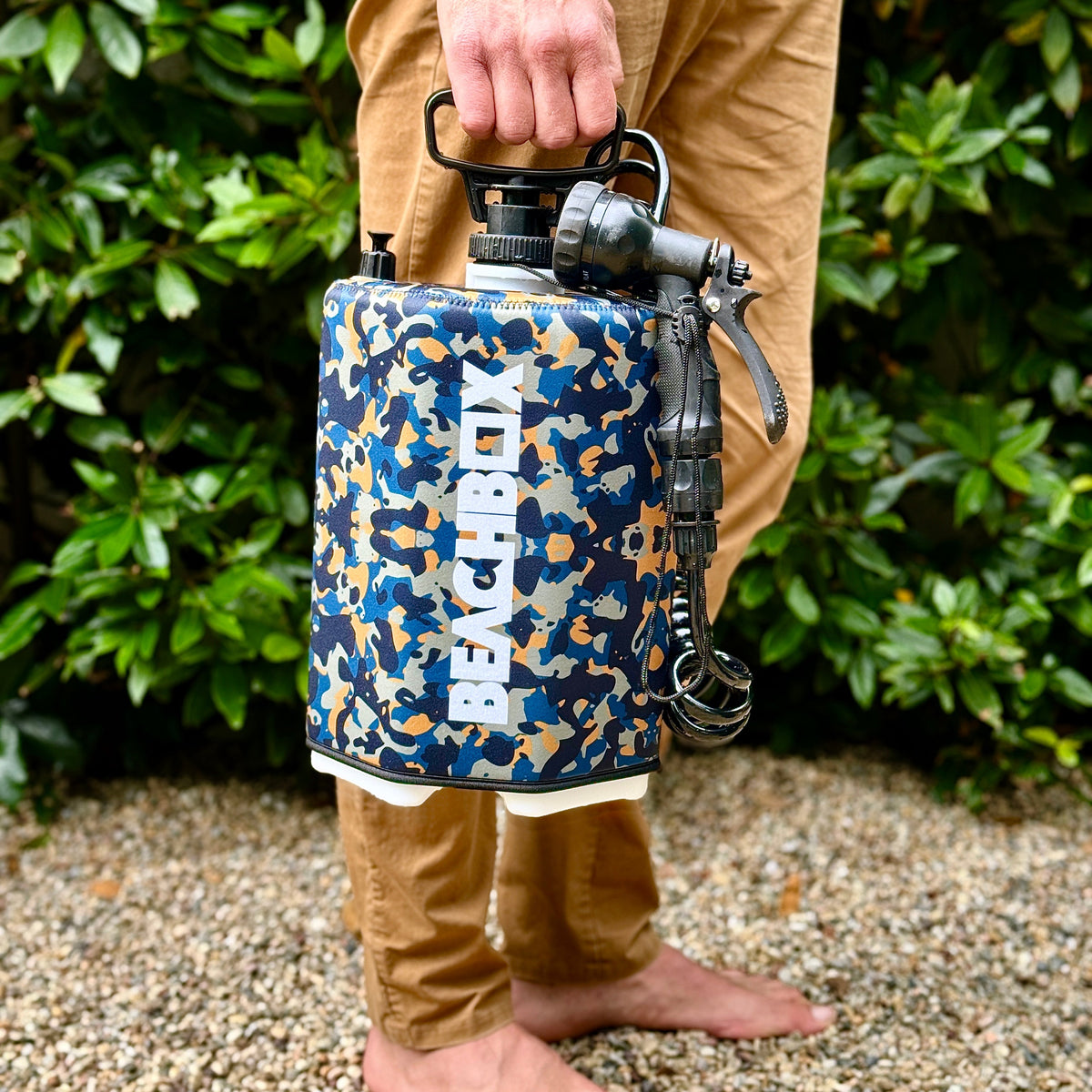
This is where a pressurized tank earns its space in the car. The BeachBox portable shower tank holds 5 liters — about 1.3 gallons — and pressurizes with a built-in hand pump. Fifteen to twenty strokes takes it to 40–50 PSI, which gives you roughly four to five minutes of continuous spray. No power, no propane, no hookup, nothing to plug in.
The five-mode spray gun matters more than it sounds. A jet setting blasts caked dust off your feet and legs; a softer shower setting is what you want for hair and face. The 7-foot neoprene hose means the tank sits on the ground while you move around, rather than you contorting yourself around a bag hung from a tree.
One thing worth being straight about: it is neoprene-insulated, not heated. Fill it with warm water and the insulation keeps it warm for hours — but the tank itself doesn't heat anything. If you want genuinely hot water at a festival, you're looking at a propane system, which is a different category of gear entirely. We covered that tradeoff in detail in our breakdown of heated versus pressurized camping showers.
It's also a rinse, not a power washer. It will take three days of playa dust off you. It will not scrub a caked-on layer of mud without help from your hands.
At 17 inches tall and about 14 pounds when full, it lives in a car trunk comfortably. It is not a backpacking item, and if you're walking a mile in from a shuttle lot with everything on your back, it's the wrong tool. For drive-in camping — which is how most festival camping works — it's ideal.
How much water do you actually need?
This is where people over-plan. A quick full-body rinse for one adult runs 1.5 to 2 liters if you're turning the water off while you soap. That means a 5-liter tank covers two or three rinses before it needs a refill.
Most festivals have potable water refill stations in the campground, so a single tank plus a 5-gallon jerry can in the trunk realistically covers two people for a full weekend. If you want the full breakdown on water math, we went deep on how much water you actually need to shower while camping.
Fill your tank in the morning with warm water if you can get it, and the insulation will still have it pleasant by evening.
The rest of the hygiene kit
A rinse solves the big problem. These solve the small ones:
- Biodegradable soap. Dr. Bronner's or similar. You're rinsing onto open ground — use something that won't poison it.
- A quick-dry microfiber towel. Cotton towels never dry at a festival and start to smell by day two.
- Dry shampoo. For the days you don't rinse. It buys you a day, not three.
- Baby wipes. Still useful for hands, face and midday touch-ups. Just don't rely on them as your only plan.
- Flip-flops or camp sandals. For standing on while you rinse, and for the walk back.
- A sealable bag for wet clothes. Wet swimwear in a duffel for three days is its own kind of mistake.
Being a good neighbor about it
Two rules. First, don't dump greywater near anyone's tent or in a walkway — pick a spot where it drains away and soaks in. Second, use privacy. Nobody at the campsite next to you signed up for a show, and most festivals have explicit rules about public nudity in the campgrounds. A changing tent or a strung-up tarp handles it.
Also: check your festival's gear policy before you pack. Most drive-in camping festivals allow personal water containers without issue, but a few restrict what you can bring into camping areas, and a handful of desert events have specific greywater rules. Burning Man is the strictest example — we wrote a full guide on staying clean at Burning Man if that's your event.
Frequently asked questions
Can you bring a portable shower to a music festival?
At most drive-in camping festivals, yes. Personal water containers and portable showers are generally permitted in the campgrounds. Restrictions vary by event, though, so check your festival's prohibited items list and greywater rules before you pack — desert events in particular often require you to contain your runoff rather than let it soak into the ground.
How much does a shower cost at a music festival?
Pay-per-use shower trailers at large camping festivals typically run about $10 per shower. Bonnaroo charges around $10, and Electric Forest is in a similar range. Some VIP and upgraded camping packages include shower vouchers, so check what your ticket already covers before budgeting for it.
How do you shower at a festival without a shower?
Bring your own water and rinse at your campsite. A pressurized portable shower gives you real running water without a hookup: wet down, turn the water off, soap up with biodegradable body wash, then rinse from the head down. Set up on a mat where water drains away from tents, and use a pop-up changing tent for privacy.
How much water do you need for one festival shower?
About 1.5 to 2 liters per adult for a quick full-body rinse, as long as you shut the water off while soaping. A 5-liter tank covers two to three rinses. Plan on refilling at the campground's potable water station, or keep a jerry can in the car.
Do baby wipes actually work for festival hygiene?
They help, but they're a supplement rather than a solution. Wipes redistribute dirt more than they remove it, and after a day or two of dust and sweat they stop keeping up. They're best for hands, face and midday touch-ups between actual rinses.
Can you get hot water at a festival campsite?
Not from an insulated tank on its own — insulation keeps water warm, it doesn't heat it. Fill your tank with warm water in the morning and a neoprene-insulated tank will still be comfortable by evening. For genuinely hot water on demand you need a propane-fired system, which is heavier, more expensive, and more setup than most festival campers want.
Bottom line
The reason people give up on festival hygiene isn't laziness. It's that the official option is expensive, slow, and busiest exactly when you need it. Take the line out of the equation and the problem shrinks to five minutes a day.
Bring your own water. Rinse in the quiet hours. Sleep clean.
If you want a setup that handles it without a hookup, propane, or a power source, take a look at the BeachBox portable shower tank — $120 with free U.S. shipping.

Leave a comment
This site is protected by hCaptcha and the hCaptcha Privacy Policy and Terms of Service apply.