
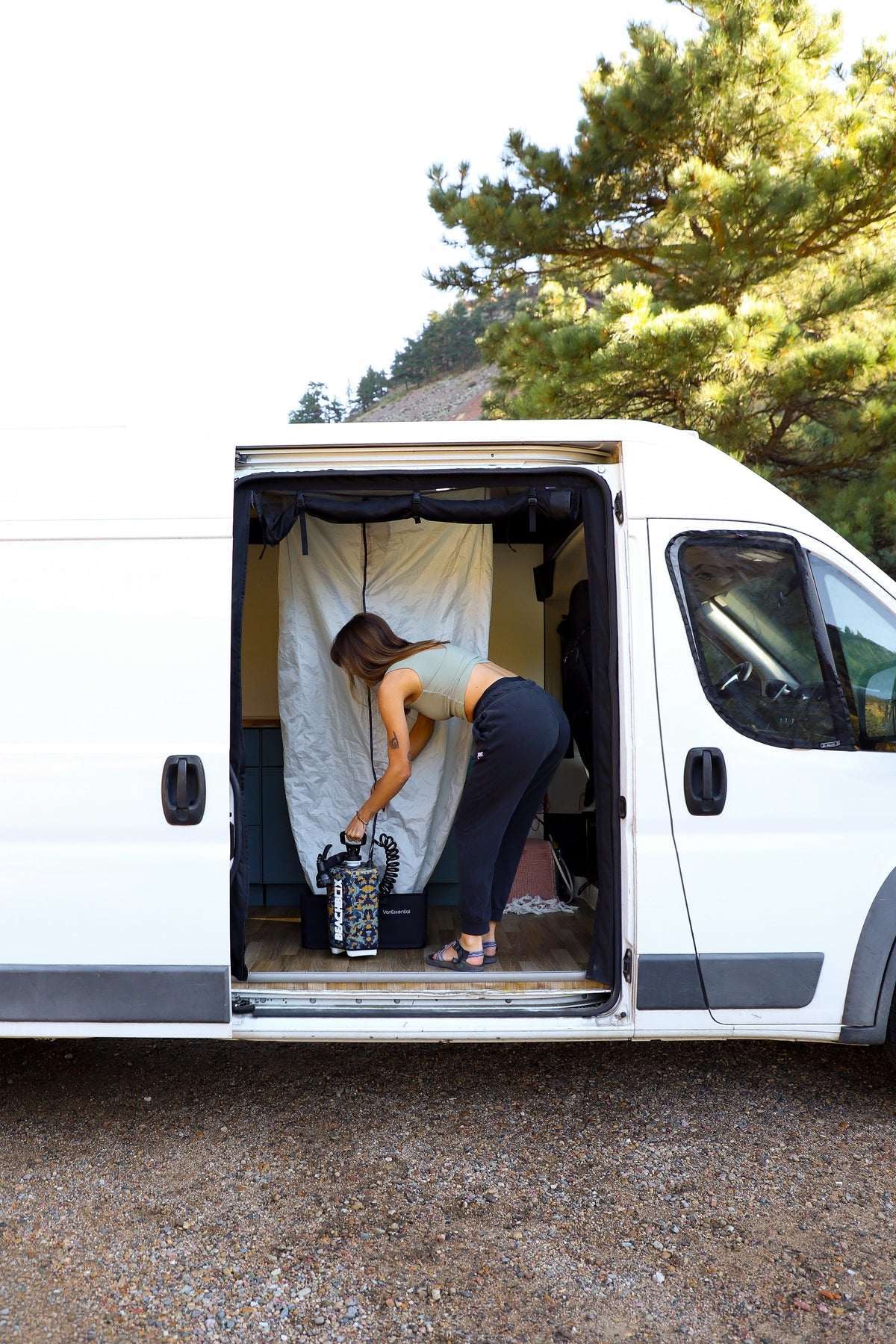
Every van build shower conversation starts the same way: you sketch the floor plan, block out the bed and the kitchen, and then stare at the leftover square meter wondering if a wet bath fits. It doesn't — not without sacrificing something you'll use every single day for something you'll use a few minutes a week.
That's the honest math most van builders eventually land on. A shower is one of the biggest space, weight, and cost decisions in a van build, and it's the one people most often regret — in both directions. Some skip it and end up miserable after a week of dusty trailheads. Others build a full wet bath and end up using it as a closet.
Here's where a shower can actually go in a van build, what each option really costs you, and how to decide which one fits how you actually travel.
Option 1: The Full Indoor Wet Bath
The Instagram-famous option. A sealed cubicle with a drain pan, waterproof walls, a roof vent, and usually a cassette toilet sharing the space.
What it takes: Roughly 80cm x 80cm of floor space, a gray water tank, a water pump, a water heater (diesel, propane, or electric), plumbing runs, and serious waterproofing. Expect it to consume $2,000–$5,000 of your build budget and a meaningful chunk of your payload.
Who it's for: Full-timers in cold climates. If you're living in the van through winter and showering inside is non-negotiable, a wet bath earns its footprint.
The catch: Talk to full-timers and a pattern emerges — many use the wet bath as gear storage and shower at gyms, campgrounds, or outside. A 40-liter water supply disappears fast at 6–8 liters per minute of flow, so even wet bath owners take navy showers. You're building a small, expensive, mold-prone room for a two-minute rinse.
Option 2: The Rear-Door Shower
The most popular compromise. A shower head on a hose mounted near the rear doors — swing them open, stand on the bumper step or a mat, and rinse with the doors as your privacy screen.
What it takes: A water tank, a 12V pump, a mixer or inline heater if you want warm water, and an exterior-rated shower point. Usually $300–$1,000 depending on how far you take heating.
Who it's for: Surfers, mountain bikers, and anyone whose dirt happens outside the van. Sandy wetsuits and muddy legs never need to come inside.
The catch: It's plumbed into the van, which means winterizing lines, a pump that can fail, and a system that only works where the van is parked. If your van is at a trailhead parking lot and your campsite is a walk away, your shower didn't come with you.
Option 3: The Roof-Mounted Solar Shower
A pressurized black tank mounted on the roof rack, heated by the sun, gravity- or pressure-fed to a rear hose.
What it takes: Roof rack space, 20–40kg of water weight up top (worth thinking hard about — that's high center-of-gravity mass on washboard roads), and $150–$400.
Who it's for: Warm-climate travelers who drive daily. Sun on the move heats the tank by evening.
The catch: Zero temperature control. Overcast day, shaded camp, shoulder season — cold water. And a full 30L rooftop tank affects handling more than most people expect.
Option 4: The Portable Shower (No Plumbing at All)
The option most van build guides treat as an afterthought, and the one a lot of experienced van lifers quietly end up with: skip built-in plumbing entirely and carry a self-contained portable shower.
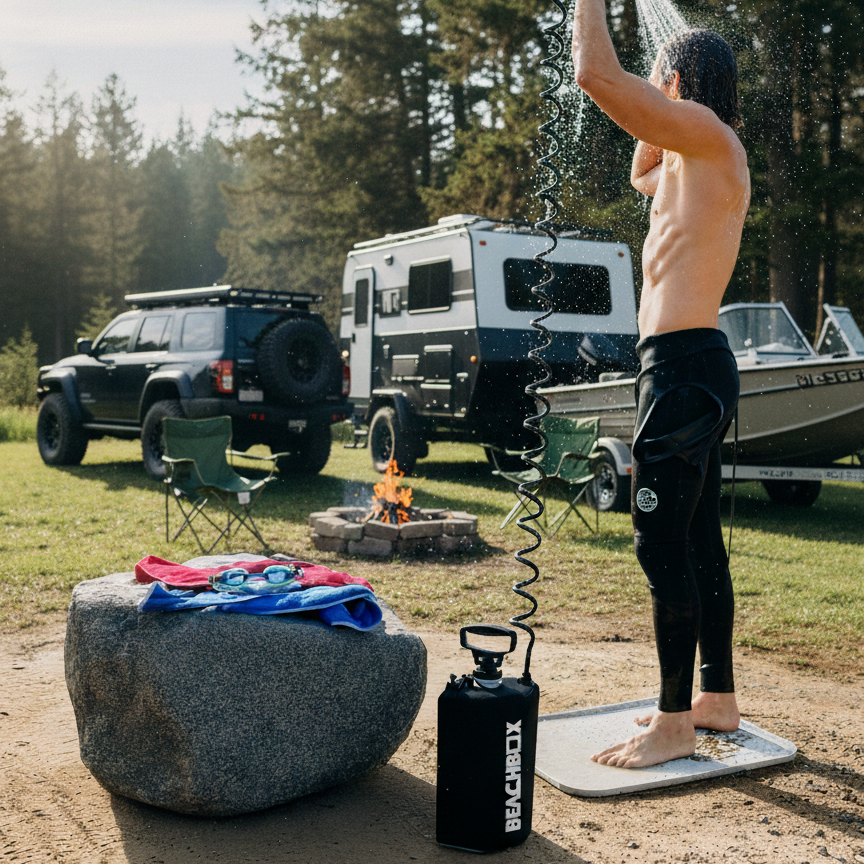
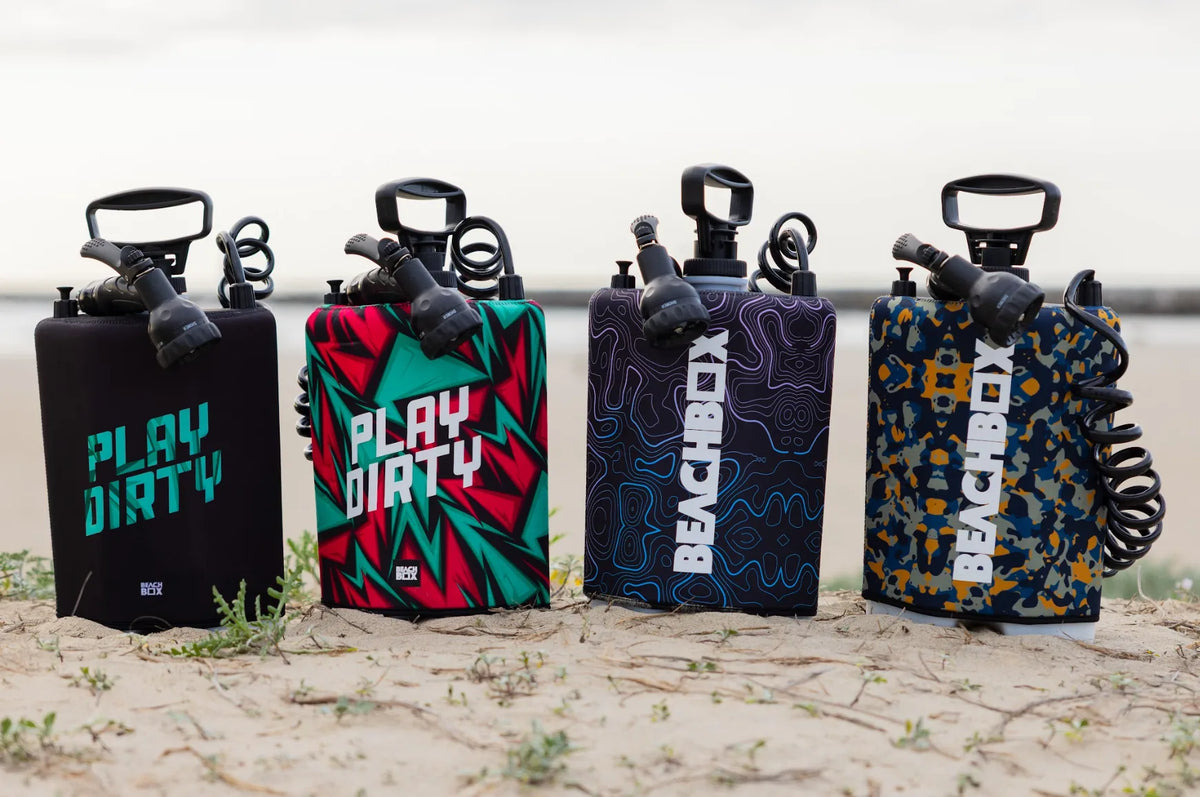
This is where an insulated tank changes the math. The BeachBox shower tank is a 5-liter tank wrapped in a 33mm neoprene sleeve — fill it with hot water from a kettle, a gas station tap, or a gym sink, and the insulation holds the heat until you use it. Hand pump for pressure, five spray modes from wide rinse to targeted jet. No battery, no propane, no wiring, no plumbing runs, no winterizing.
What it takes: A storage spot the size of a small daypack. $120. That's the whole list.
Why it works in a van build:
- It frees your floor plan. The square meter a wet bath demands becomes bed length, a bigger galley, or garage storage for bikes and boards.
- It works away from the van. Campsite's a walk from the parking spot? The shower comes with you. It also rinses dogs, dishes, feet, and wetsuits — a plumbed rear shower only does its job where the van sits.
- Warm water on your schedule, not the sun's. Boil a kettle in the morning, shower warm at 6pm. The insulation does the waiting.
- Nothing to fail. No pump wiring, no burst lines in a freeze, no gray tank sensor lying to you.
The catch: 5 liters is a deliberate personal rinse, not a 10-minute hotel shower. Wet down, stop, soap, rinse — the navy shower method. Done that way, 5 liters covers hair, body, and feet. If you want to stand under endless hot water daily, this isn't that, and neither is anything else in a van.
The Hybrid Setup Most Van Lifers Actually Land On
After a year on the road, most people converge on some version of this:
| Need | Solution |
|---|---|
| Daily rinse (dust, sweat, salt) | Portable insulated shower at camp |
| Full wash every few days | Gym membership ($25/mo, near most highways) or campground facilities |
| Gear, dog, and wetsuit rinse | Same portable shower, outside the van |
| Winter backup | Truck stops, rec centers, friends' houses |
Notice what's missing: the built-in shower. The hybrid approach covers every real scenario for under $150 plus a gym membership, with zero build complexity. That's why the honest advice for most first builds is: leave the plumbing out, carry a portable, and add a rear-door shower point later only if you find yourself genuinely missing it. Retrofitting a shower point is a weekend job. Un-building a wet bath is a demolition.
If you're weighing tank types for that portable slot, our van life shower breakdown compares solar bags, electric pumps, propane heaters, and insulated tanks in detail.
Frequently Asked Questions
Is a shower worth it in a van build?
A built-in wet bath is worth it for cold-climate full-timers and almost nobody else. Most van lifers get better results from a portable shower plus gym memberships — it costs 95% less, weighs almost nothing, and doesn't consume your floor plan.
Where do you shower if your van doesn't have one?
The standard rotation: a portable shower at camp for daily rinses, gyms (Planet Fitness is the van life default) for full washes, plus campgrounds, rec centers, and truck stops. An insulated portable tank fills the daily gap the others can't — warm water anywhere, no facilities needed.
How much water do you need for a van shower?
A deliberate navy shower — wet, stop, soap, rinse — takes 4–6 liters. A continuous-flow shower head burns that in under a minute, which is why even 40-liter built-in systems force short showers. Efficiency matters more than tank size.
Can you have a hot shower in a van without a water heater?
Yes. Fill an insulated tank with hot water from a kettle, tap, or gym sink and the insulation holds the temperature for hours. That's the entire design premise of the BeachBox tank — heat retention by insulation instead of onboard heating hardware.
How much does it cost to add a shower to a van build?
Full wet bath: $2,000–$5,000 with plumbing, heating, and waterproofing. Rear-door plumbed shower: $300–$1,000. Roof solar shower: $150–$400. Portable insulated shower: $120, no installation.
Does a wet bath add resale value to a van?
Sometimes — but a well-built garage and bed area usually adds more. Many buyers specifically hunt for builds without wet baths because they'd rather have the storage. Don't build one for resale; build it only if you'll use it.
The Bottom Line
The best place for a shower in most van builds is outside the walls. A wet bath is a $3,000 square meter that full-timers routinely turn into a closet; a plumbed rear shower is useful but only works where the van is parked; a rooftop solar tank showers on the weather's schedule, not yours.
A portable insulated shower flips the decision. You keep your full floor plan, you shower warm anywhere — at the van, at the campsite, at the trailhead — and you've spent $120 instead of thousands. If van life later teaches you that you truly need plumbed water, add it then, with a year of real experience informing the build.
Start with the version that can't fail, doesn't freeze, and doesn't cost you your garage space.

Leave a comment
This site is protected by hCaptcha and the hCaptcha Privacy Policy and Terms of Service apply.