
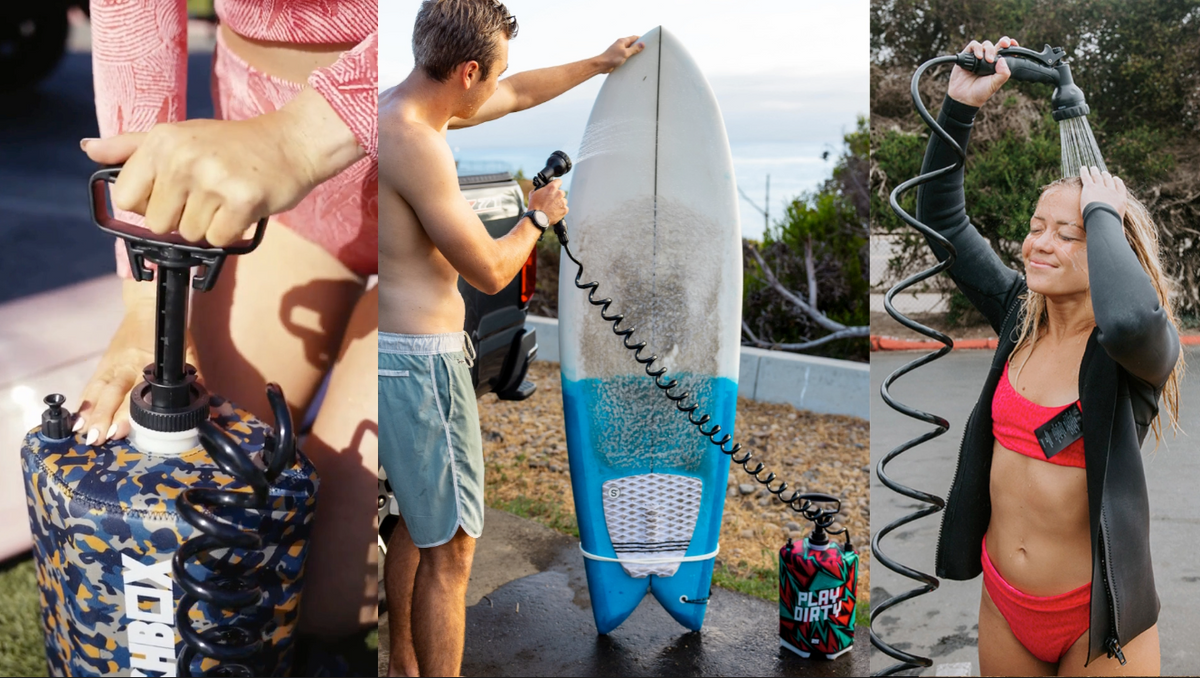
You know the feeling. Session's done, board's on the roof, and you're standing in a parking lot in a wetsuit that's been soaking since dawn. The cold hose by the bathrooms has a 10-minute line. The tap at the side of the lot runs so cold it makes rinsing your hair feel like a punishment.
A good surf shower fixes all of that. The question is which one actually works.
What Makes a Surf Shower Actually Good
Not all portable showers are built with surfers in mind. Here's what matters when you're choosing one.
Warm Water — Without Infrastructure
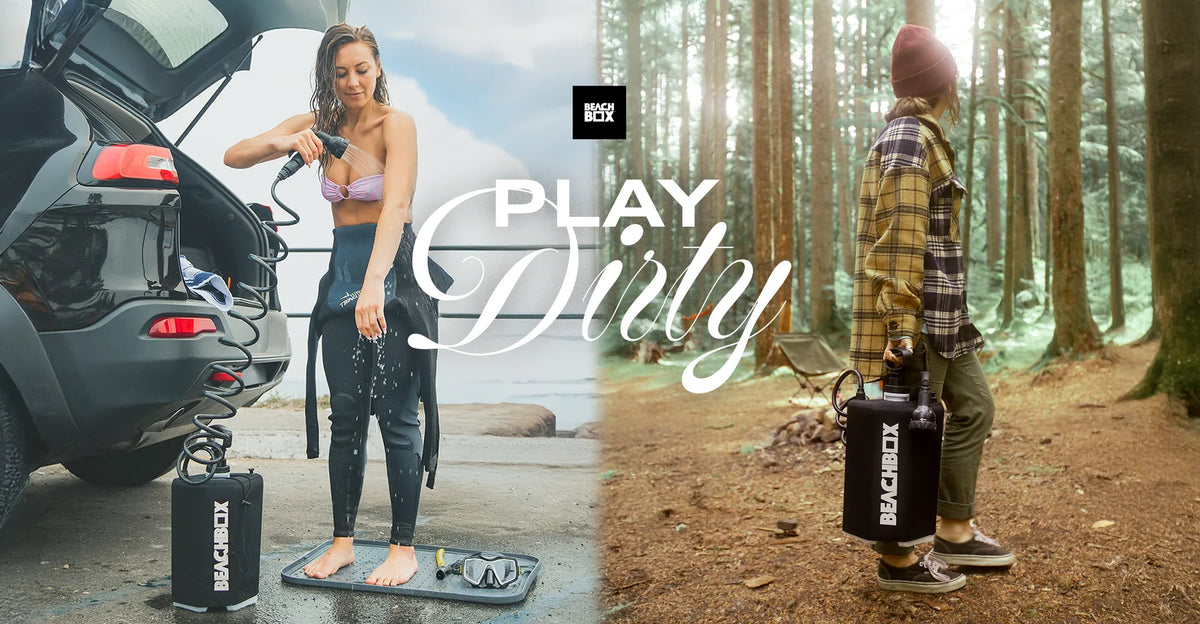
Cold rinsing after surfing isn't just unpleasant. Getting out of a wetsuit in cold water on a windy day, then dumping cold water over your head, is a fast way to feel miserable. A surf shower needs to deliver warm water — and it needs to do that at a beach parking lot, not just at a campsite with a power hookup.
That rules out electric heater rods and propane units. You don't have a plug at a beach lot. You need insulation — a unit that holds the temperature of the hot water you filled it with at home.
Enough Pressure to Actually Rinse
Gravity bags drip. That's fine for a 10-minute campsite shower, but it's frustrating when you're trying to blast salt out of your hair or clear sand from your ears. A surf shower should have enough pressure to feel like a real rinse — not a trickle.
Compact and Car-Friendly
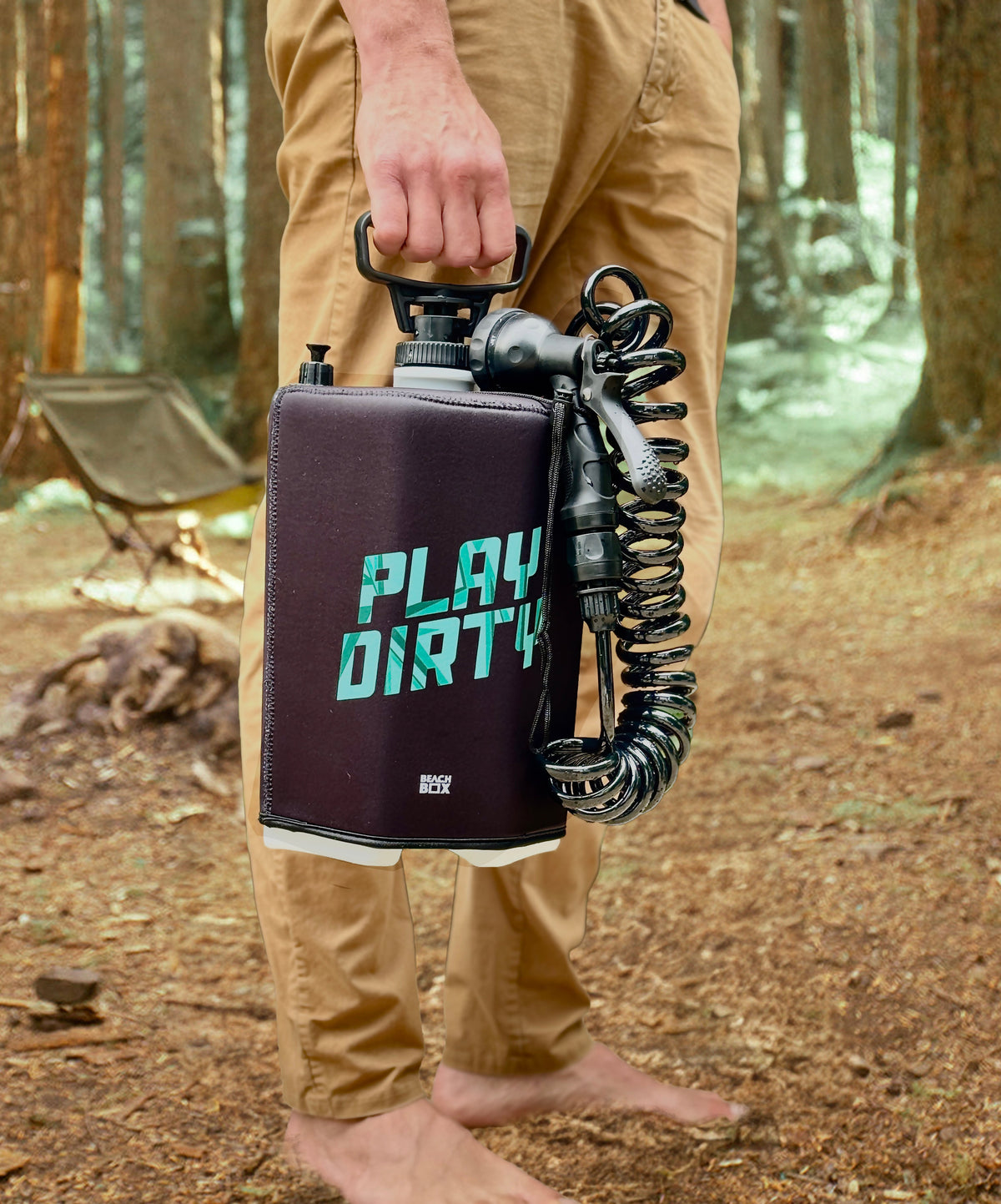
You're already fitting a board, fins, a wetsuit bag, and half the contents of your garage into your car. Your surf shower needs to fit in what's left. Compact matters.
Simple to Use
Post-session, you're tired. The last thing you want is a system with four steps, a battery to check, and a pressurization process that requires a garden hose. The best surf shower is grab, pump, rinse. Done.
The Case for an Insulated Pressurized Tank
Gravity Bags
Cheap, lightweight, and easy to find. The problem: pressure is weak, flow is inconsistent, and there's no insulation. Fine for a basic rinse. Not great for surfers who want a real wash after a session.
Electric Pump Showers
Strong, consistent pressure — genuinely good. The catch: battery needs charging, you need a separate reservoir, and if the battery dies mid-rinse, you're done. For a quick surf shower in a parking lot, the complexity isn't worth it.
Insulated Pressurized Tank
This is the category BeachBox sits in. A rigid, insulated tank you fill with hot water at home. A hand pump builds pressure — five spray modes let you adjust from a wide rinse to a targeted jet. No battery, no hookup, no hanging required. The neoprene sleeve holds temperature so the water is still warm when you arrive.
For surfing specifically, this format wins. It works anywhere, takes 30 seconds to set up, and delivers warm pressurized water without relying on anything at the parking lot.
How to Use a Surf Shower at the Beach
Before You Leave Home
Fill the tank with hot water — shower temperature or slightly above. Don't overfill; leave a little air at the top so the pump can build pressure.
At the Lot
Pump the handle 8–10 times to pressurize. Select your spray mode — wide spray for rinsing hair and face, narrower jet for blasting sand out of wetsuit seams. Rinse, repump as needed, done.
After the Session
Rinse the tank with fresh water and leave the lid off to dry. Takes 30 seconds and keeps it fresh for next time.
What to Rinse (and in What Order)
- Hair and face first — salt in eyes and ears is the most uncomfortable
- Wetsuit on — run water into the neck, let it flush through, then peel it down
- Wetsuit seams — sand hides in every fold; a targeted spray gets it out
- Feet and board leash area — easy to forget, always worth doing
Frequently Asked Questions
What is a surf shower?
A surf shower is a portable water source designed for rinsing off after surfing — removing saltwater, sand, and wetsuit residue without needing access to a campground or outdoor tap. The best ones are insulated to deliver warm water and pressurized so you get a real rinse rather than a trickle.
How much water do you need to shower after surfing?
5 liters (about 1.3 gallons) is enough for a thorough personal rinse if you use it efficiently. Prioritize hair and face first while the water is warmest and pressure is highest.
Does a surf shower keep water warm?
An insulated tank with a neoprene sleeve retains heat much better than gravity bags — water filled hot at home will still be noticeably warm by the time you arrive at the beach.
What's the difference between a surf shower and a camping shower?
A surf shower needs to be compact, quick to set up, and work without infrastructure. BeachBox is built around the surf use case — compact, insulated, pressurized, no power needed.
The Bottom Line
The best surf shower is the one you'll actually bring with you every time. Compact enough to live in your car, simple enough to use when you're cold and tired, and warm enough to make the post-surf rinse something you look forward to instead of dreading.
A pressurized insulated tank hits all three. Fill it the night before, throw it in the car with your board, and warm water is waiting when you get out.

Leave a comment
This site is protected by hCaptcha and the hCaptcha Privacy Policy and Terms of Service apply.