
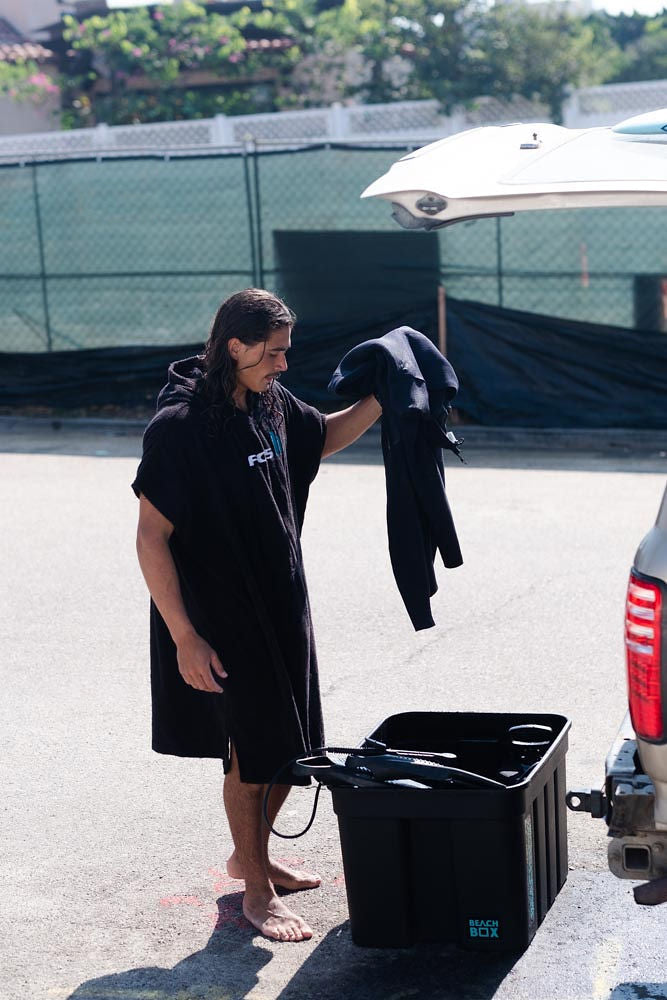
You've just had the best session of the month. Waist-high, glassy, nobody out. You paddle in, strip off your wetsuit in the parking lot, and then it hits you: there's no shower. No rinse station. No hose bib on the lifeguard stand. Just your car, a bag of salty gear, and a 45-minute drive home.
This is a weekly reality for most surfers. Beach infrastructure is inconsistent at best — some spots have a cold-water rinse station with three settings: dribble, broken, and missing. Most have nothing. And if you're surfing off the beaten path, a dedicated outdoor shower might be miles away.
Knowing how to shower after surfing — properly, without a campground hookup — is one of those skills that quietly separates the surfers who stay salty all day from the ones who drive home fresh and comfortable. Here's what actually works.
Why Rinsing After Surfing Actually Matters
It's easy to skip the rinse and tell yourself you'll shower at home. But there are real reasons not to:
Salt and Sand Destroy Wetsuits
Saltwater left to dry inside neoprene accelerates the breakdown of the rubber. Wetsuits rinsed after every session routinely last twice as long as ones that aren't. At $200–$400 per suit, that's a compelling reason to carry water.
Your Skin and Hair Take a Hit Too
Salt draws moisture out of your skin and hair. If you're surfing frequently and skipping rinses, you'll notice it — dry scalp, brittle hair ends, irritated skin around your neck and wrists where the suit seals. A quick freshwater rinse after every session counters most of this.
Your Car Doesn't Love Salt Either
Wet wetsuits in car seats, backpacks dripping brine on your upholstery, booties that sit in the footwell — it adds up. Rinsing before you pack up keeps your interior cleaner and your gear smelling like gear instead of a fish market.
Your Options for Rinsing Off at the Beach
Here's how the three main options stack up:
| Option | Water Temp | Pressure | Portable? | Cost |
|---|---|---|---|---|
| Beach rinse station | Cold only | Low | ✗ Fixed location | Free |
| 5-gallon jug | Cold / lukewarm | Very low | ✓ Bulky | ~$20 |
| BeachBox portable shower | Warm / hot | Good | ✓ Compact | $120 |
Option 1: The Beach Rinse Station (When You're Lucky)
Some beaches — mostly state parks and popular surf spots — have outdoor showers or rinse stations. They're cold-only, low pressure, and coin-operated in some areas. Use one if it's there. The problem: most surf spots don't have them, and the ones that do tend to have lines on weekend mornings.
Option 2: A 5-Gallon Jug in Your Trunk
The classic move. Fill a jug at home, use gravity to rinse off. It works, but:
- Water is cold by default in winter, lukewarm at best in summer
- 5 gallons is awkward to manage solo — try tilting one while rinsing your hair
- No pressure means salt and sand don't rinse off cleanly
Free, and better than nothing. But it's also why people eventually upgrade.

Option 3: A Heated Portable Shower
This is the category that matters most if you surf year-round or in cold water. Warm water on demand with actual pressure — your wetsuit gets rinsed properly, your hair gets clean, and you're not shivering in a parking lot.
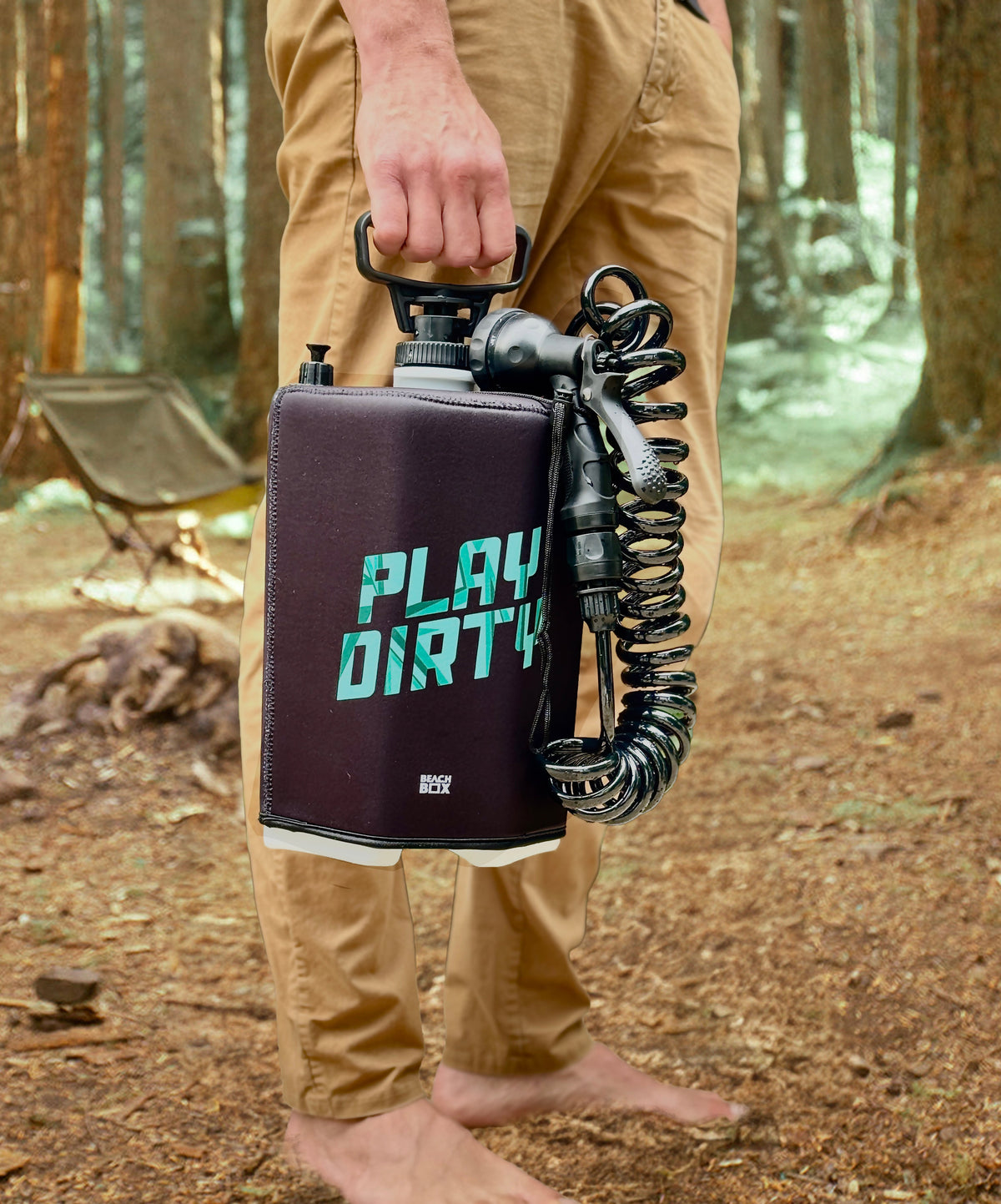
The BeachBox portable shower holds 5 liters of hot water inside a 33mm neoprene-insulated tank — the same material as your wetsuit — which keeps water warm for hours. Fill it at home, hand pump builds pressure, five spray modes handle everything from rinsing a wetsuit to washing your hair. No battery, no propane, no electricity.
At $120 it replaces the jug system permanently and delivers warm water every session, not just when you got lucky with timing.
How to Set Up a Post-Surf Rinse Routine
A good rinse routine takes under five minutes and makes a meaningful difference over the course of a season. Here's how to structure it:
Wetsuit First, Then Body
Your wetsuit is the priority because salt starts breaking down neoprene within minutes of drying. Turn the suit inside-out as you peel it off, rinse the inside (where body oils and salt concentrate), then flip it right-side out and rinse the exterior. Five liters covers a full suit rinse with water to spare for your body.
Work Top to Bottom
For your own rinse: hair first, then face, neck, and ears (wax and salt love to collect there), then body. Working top to bottom means you're not re-contaminating clean areas.
Don't Forget Your Booties and Hood
Booties trap salt inside the rubber where you can't see it. Turn them inside out under the rinse, squeeze, repeat. Hoods just need a quick flush-through. These small pieces see the most bacterial buildup if they're not rinsed.
Hang Gear Before You Drive Home
If you have a wetsuit hanger, a few minutes of hanging in the parking lot pays off. You'll load less water weight into your car, and the suit will dry more evenly. If you're driving home right away, put the suit in a wet bag rather than balling it up — it reduces mildew and keeps your car drier.
Cold Water vs. Warm Water: Does It Matter for Rinsing?
Cold water removes salt and sand just as effectively as warm water from a gear maintenance standpoint. The difference is comfort — and for surfers in colder climates, it can be a meaningful one.
After a December session in 50°F water with an air temp of 45°F, standing in a parking lot getting hit with cold water from a jug is miserable. That's the use case where a heated portable shower goes from "nice-to-have" to something you genuinely look forward to at the end of every session. It's not about luxury — it's about building a routine you'll actually stick to, which is what actually protects your gear and your skin long-term.
What to Pack in Your Surf Kit
If you're building out a car-based surf kit, here's what actually earns its space:
| Item | Why It Matters |
|---|---|
| Portable heated shower | Warm rinse ready the moment you're done — no hunting for facilities |
| Wetsuit hanger | A few minutes hanging beats balled-up mildew in a bag |
| Microfiber towel | Dries faster, takes less space than a beach towel |
| Flip flops / water sandals | Keeps feet off hot asphalt during the rinse |
| Waterproof bag or bin | Wet gear goes in here, not on your car seats |
| Dry base layer | Something warm to throw on immediately after |
This fits in most compact car trunks without rearranging.
Frequently Asked Questions
Can I rinse my wetsuit with cold water? Yes — cold freshwater removes salt and maintains neoprene just as well as warm. Warm water is more comfortable, especially in colder months, but the key is freshwater, not temperature.
How much water do I need to rinse off after surfing? About 3–5 liters covers a full wetsuit rinse and a quick body/hair rinse. A 5-liter tank is the right minimum for a single surfer. If two people are rinsing, bring 8–10 liters or refill at home between sessions.
How do I shower after surfing if I'm far from home? A portable shower is the practical answer. Fill it with hot water before you leave, stow it in your car, and you'll have warm water waiting regardless of where you surf. For day trips, 5 liters lasts through the rinse with ease.
Is it okay to rinse a wetsuit with tap water? Yes — any freshwater (tap, filtered, or spring) works. The goal is removing salt, and tap water does that effectively. Avoid soaps or detergents unless you have a wetsuit-specific cleaner; regular soap can degrade the neoprene.
How often should I rinse my wetsuit? After every single session. Even a quick 2-minute rinse makes a significant difference over the life of the suit compared to skipping it.
Does it matter where I get the water warm? No. The BeachBox design works because the insulated tank retains heat from wherever you fill it — your home tap, a campsite spigot, a gym locker room. Fill it hot, go surf, it's still warm when you're done.
The Bottom Line
You don't need a campground shower or a beach rinse station to clean up after surfing. You need a system you can take with you — and one that actually makes you want to use it consistently.
The difference between surfers who rinse every time and those who skip it mostly comes down to convenience. If it's a jug of cold water that takes effort to manage, you'll skip it when you're tired or cold. If it's a warm, pressurized rinse waiting in your trunk, you'll use it every single time — and your wetsuit will outlast everyone else's on the lineup.

Leave a comment
This site is protected by hCaptcha and the hCaptcha Privacy Policy and Terms of Service apply.