
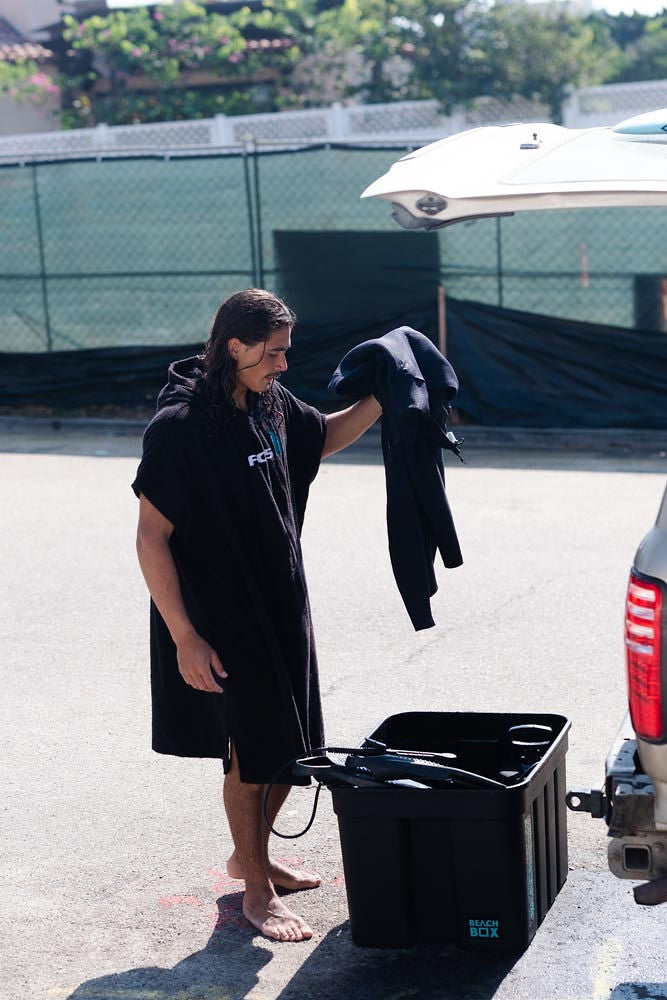
You peel your wetsuit off in the parking lot, salt-stiff and tired, and you're already thinking about whether you can get away with just tossing it in the trunk and dealing with it later. You've done it before. It smells bad for a few days, dries out weird, and eventually the neoprene starts to break down faster than it should. A good wetsuit costs $200–$400. The three minutes it takes to rinse a wetsuit after surfing is the cheapest insurance you can buy.
The problem is that most surfers either skip the rinse entirely or do it wrong — blasting cold hose water at the outside of the suit and calling it done. Salt, sunscreen residue, bacteria from warm water (and, let's be honest, from you), and UV degradation all work together to shorten the life of your wetsuit. The rinse matters, and so does how you do it.
Here's how to rinse a wetsuit correctly every time, plus what to do when you're surfing somewhere without a hose.
Why Rinsing Your Wetsuit Actually Matters
Saltwater is corrosive. Left to dry on neoprene, salt crystals expand and contract with temperature changes — slowly breaking down the material from the inside. The seams go first. Then the flexibility. Then the warmth retention.
But salt isn't the only problem.
Bacteria and Odor Build-Up
Wetsuits trap everything: body heat, sweat, organic matter from the ocean, and bacteria. Warm water surf spots are particularly brutal — bacteria thrive in warmer conditions and multiply fast inside a damp suit. The result is the classic "wetsuit smell" that no amount of airing out can fully fix once it sets in.
A proper freshwater rinse flushes the bacteria-heavy salt environment before it has time to take hold. The sooner after your session, the better.
UV and Neoprene Degradation
Salt + sun is a particularly bad combination for neoprene. Rinsing after surfing removes the salt that amplifies UV damage and helps the material stay supple. A suit that's properly rinsed and stored flat or hung by the waist (never the shoulders — that stretches the neck opening) will outlast a neglected one by years.
How to Rinse a Wetsuit After Surfing: Step by Step
The goal is to flush freshwater through every part of the suit — inside and out. Here's the correct sequence.
1. Start With the Inside
Turn the wetsuit inside out and rinse it first. The inside of the suit — the lining that contacts your skin — carries the most bacteria and organic buildup. Cold or lukewarm freshwater works. Hot water damages the neoprene and degrades the glue used in seam construction, so keep it cool.
Work from top to bottom: collar, then arms, then torso, then legs. Squeeze the material gently as you go — you're not washing it aggressively, just flushing it.
2. Rinse the Outside
Flip it right-side out and repeat. Pay attention to the zipper and any sealed seams — salt can get trapped in zipper teeth and corrode the hardware over time.
3. Dunk It If You Can
If you have a bucket or tub handy, a 2–3 minute soak is better than a spray rinse alone. Fill with cool freshwater, submerge the suit, and gently work the water through. This is especially worth doing if you've been surfing in a particularly warm or dirty break.
Some surfers add a small amount of wetsuit shampoo or baby shampoo to the soak. Not necessary after every session, but worth doing every few weeks.
4. Remove Excess Water Without Wringing
Don't wring the suit out — that torques the seams and stretches the neoprene in ways it doesn't want to go. Instead, lay it flat and fold it gently to press water out, or hang it doubled over a wide rack or wetsuit hanger.
5. Hang to Dry in the Shade
Hang it inside out, doubled over a thick hanger or a dedicated wetsuit rack, out of direct sunlight. UV is the enemy even after rinsing. Never stuff it in a bag wet — you'll have a mildew situation within 24 hours.
What to Do When There's No Hose at the Beach
This is where most surfers make the biggest mistake — they just skip the rinse because the parking lot doesn't have a tap.
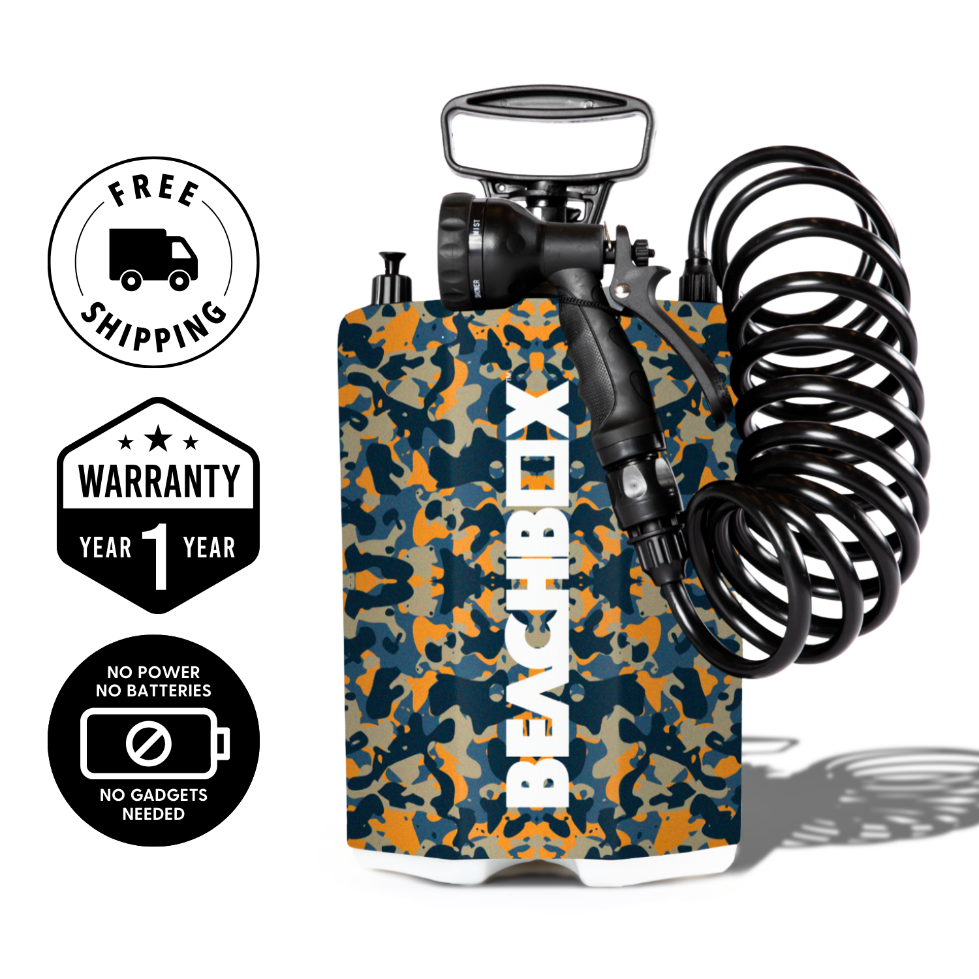
A portable shower changes that entirely. The BeachBox portable shower gives you 5 liters of pressurized water anywhere you park. Fill it at home with warm water, throw it in the car, and you've got a pressurized rinse station waiting when you get back from the water. Five liters is enough to rinse a full wetsuit, rinse yourself off, and still have water left over.
The advantage over a garden spray bottle or a basic jug: pressure. You can actually flush water through the inside of the suit rather than just wetting the outside. The pump delivers consistent pressure through 5 spray modes — you can hit inside the collar, flush through the arms, and soak the zipper track with a focused stream.
It's also warm water, which surfers who've been in cold water genuinely appreciate. The BeachBox has 33mm of neoprene insulation built into the sleeve — water stays warm for hours. You don't need a heat kit add-on (looking at you, RinseKit HeatKit — that's a $100+ extra). It's built in.
Common Wetsuit Rinse Mistakes to Avoid
Using hot water. Hot water breaks down the glue in taped seams and can warp the neoprene. Stick to cool or lukewarm.
Only rinsing the outside. The inside is where the bacteria live. Always flip the suit and rinse the lining.
Hanging it by the shoulders. The weight of a wet suit hanging from the shoulders will stretch the neck opening over time. Hang it folded over at the waist, or invest in a wide wetsuit hanger.
Leaving it in a hot car. Rolling it up wet and leaving it in a hot trunk is a fast track to mildew and neoprene damage. Rinse it as soon as possible and get it hanging.
Storing it damp. Even a slightly damp suit will develop odor. Make sure it's fully dry — inside and out — before storing it for more than a day.
How Often Should You Rinse Your Wetsuit?
After every single session, no exceptions. Even a 10-minute dip in clean ocean water warrants a rinse. The saltwater and bacteria exposure start working immediately. The rinse stops the clock.
For a deeper clean, use wetsuit shampoo (or a small amount of baby shampoo) every 3–5 sessions, or whenever the suit starts to develop a persistent smell. Let the suit soak for 15–20 minutes, rinse thoroughly, and dry as normal.
Frequently Asked Questions
Can I rinse my wetsuit with a garden hose?
Yes — a garden hose is the most common way to rinse a wetsuit at home. Make sure you're using cool or lukewarm water, not hot. Focus on the inside lining first, then the outside. If you're at the beach without a hose, a portable shower like the BeachBox gives you pressurized water wherever you park.
Is it okay to rinse a wetsuit with cold water?
Cold freshwater is fine — it's better than hot water, which can damage neoprene and seam tape. Cold water is effective at flushing out salt. The preference for warm or lukewarm water is mostly about comfort for the surfer, not a requirement for the suit.
How long does it take to dry a wetsuit?
In good conditions — hung inside out in shade with airflow — a 4/3 or 3/2 wetsuit typically dries in 4–8 hours. Thick winter suits (5/4, 6/5) can take 12–24 hours. Never put a wetsuit in a dryer or leave it in direct sun — both will damage the material.
Can I wash my wetsuit in a washing machine?
No. Washing machines — even on gentle cycles — are too aggressive for neoprene and seam tape. Hand-wash in a bathtub or bucket if you need a thorough clean, using wetsuit-specific shampoo or baby shampoo. Then rinse thoroughly with cool water.
What's the best way to store a wetsuit after rinsing?
Hang it fully dry, inside out, folded over at the waist or on a wide wetsuit hanger. Store it in a cool, dark place. Avoid folding or rolling it for long-term storage — it creates creases that weaken the neoprene over time.
Does rinsing really extend the life of a wetsuit?
Significantly. The combination of saltwater, bacteria, and UV exposure is what ages neoprene. Consistent rinsing after every session removes the salt and bacteria before they can do ongoing damage. A well-rinsed suit stored properly can last 5+ years. A neglected suit might be stiff and smelly within one season.
The Bottom Line
Rinsing your wetsuit after surfing takes three minutes and can add years to the life of a $300 piece of gear. The right approach: rinse the inside first, use cool freshwater, skip the wringer, and hang it in the shade. Don't skip it because there's no hose at the beach — a portable shower solves that completely.
The BeachBox is built specifically for this kind of post-surf situation. Pressurized water, warm temperature, small enough to live in your car. Rinse your suit, rinse yourself, and get on with the rest of your day.

Leave a comment
This site is protected by hCaptcha and the hCaptcha Privacy Policy and Terms of Service apply.